The Step Pyramid of King Djoser
So we now come to our last full day in this land of history and mystery. You'd think that this might be a time to rest and reflect on our journey. But as Benjamin Franklin said "there's plenty of time to sleep when you're dead". So we will begin our day with a visit to the Saqqara Necropolis just northwest of Memphis.

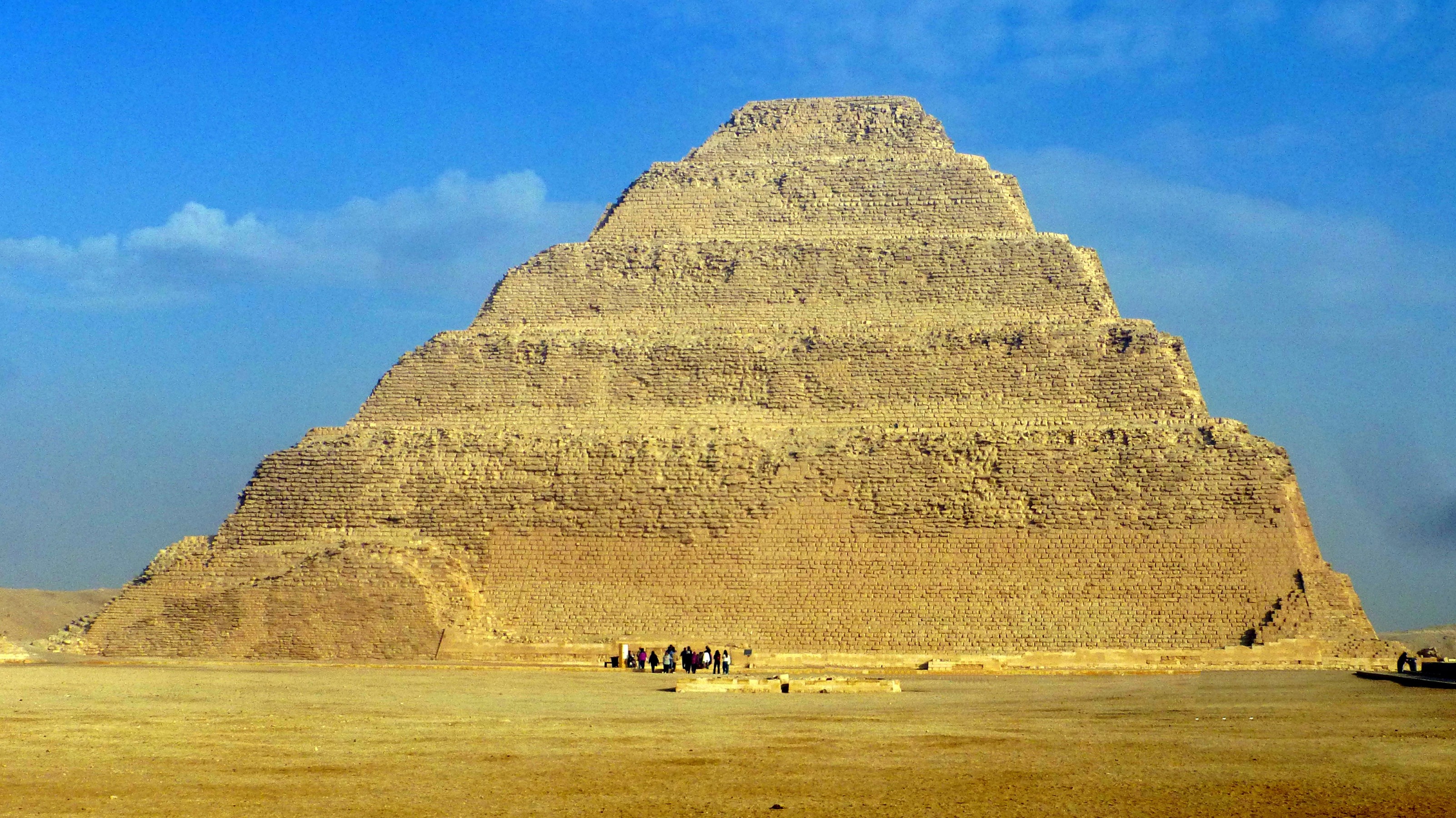
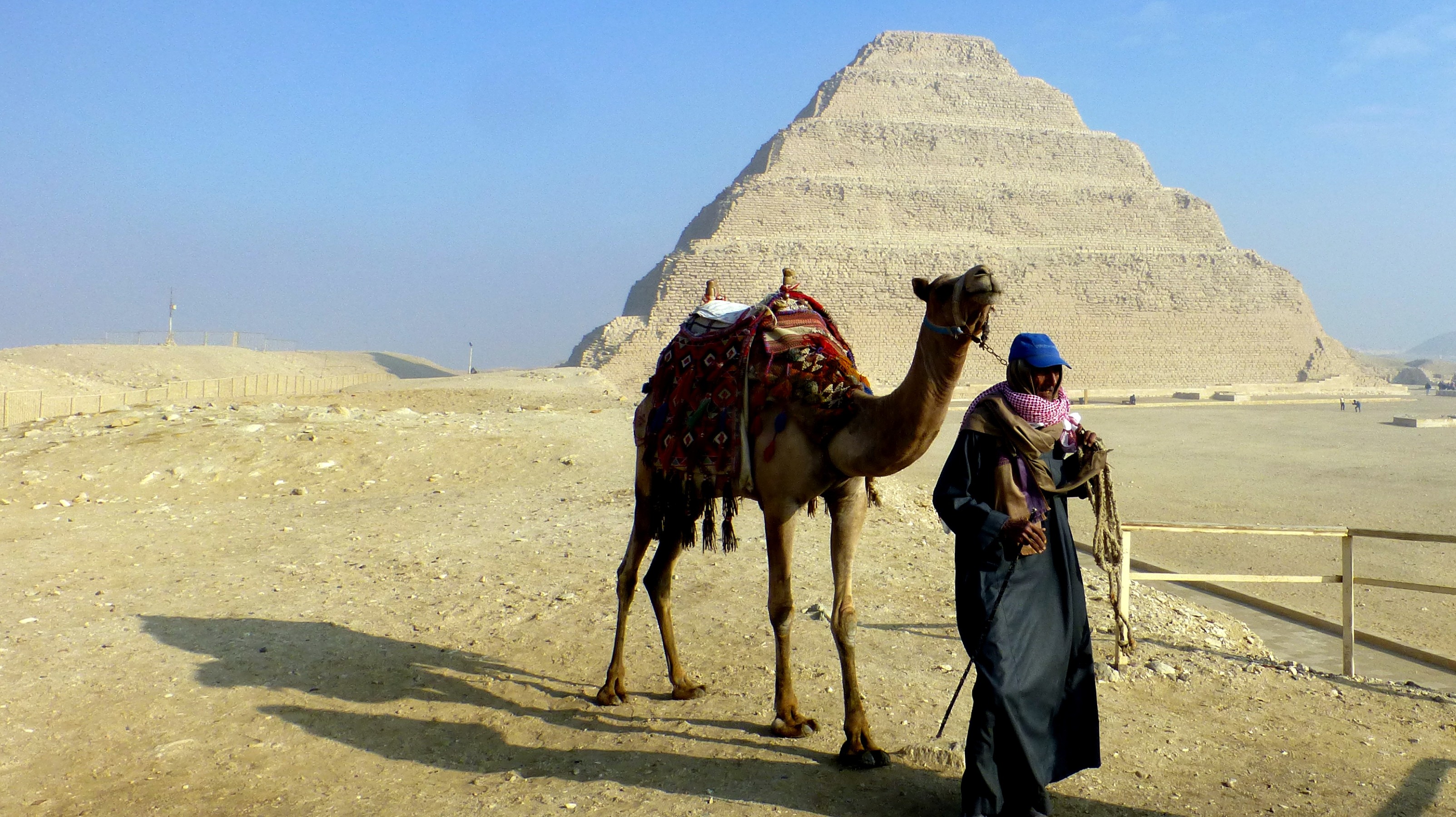
The earliest known pyramid, the Step Pyramid, was built for Pharaoh Djoser by his vizier, Imhotep between 2667 and 2648 BC. The pyramid is constructed of cut limestone and originally had a polished white limestone cladding. Unfortunately, over the millennia it has been stripped of the limestone and reused. The pyramid is stepped because it was built by stacking several mastabas (rectangular tombs) on top of one another. It is a transition from single level mastabas made of mud brick to the pyramid shape.
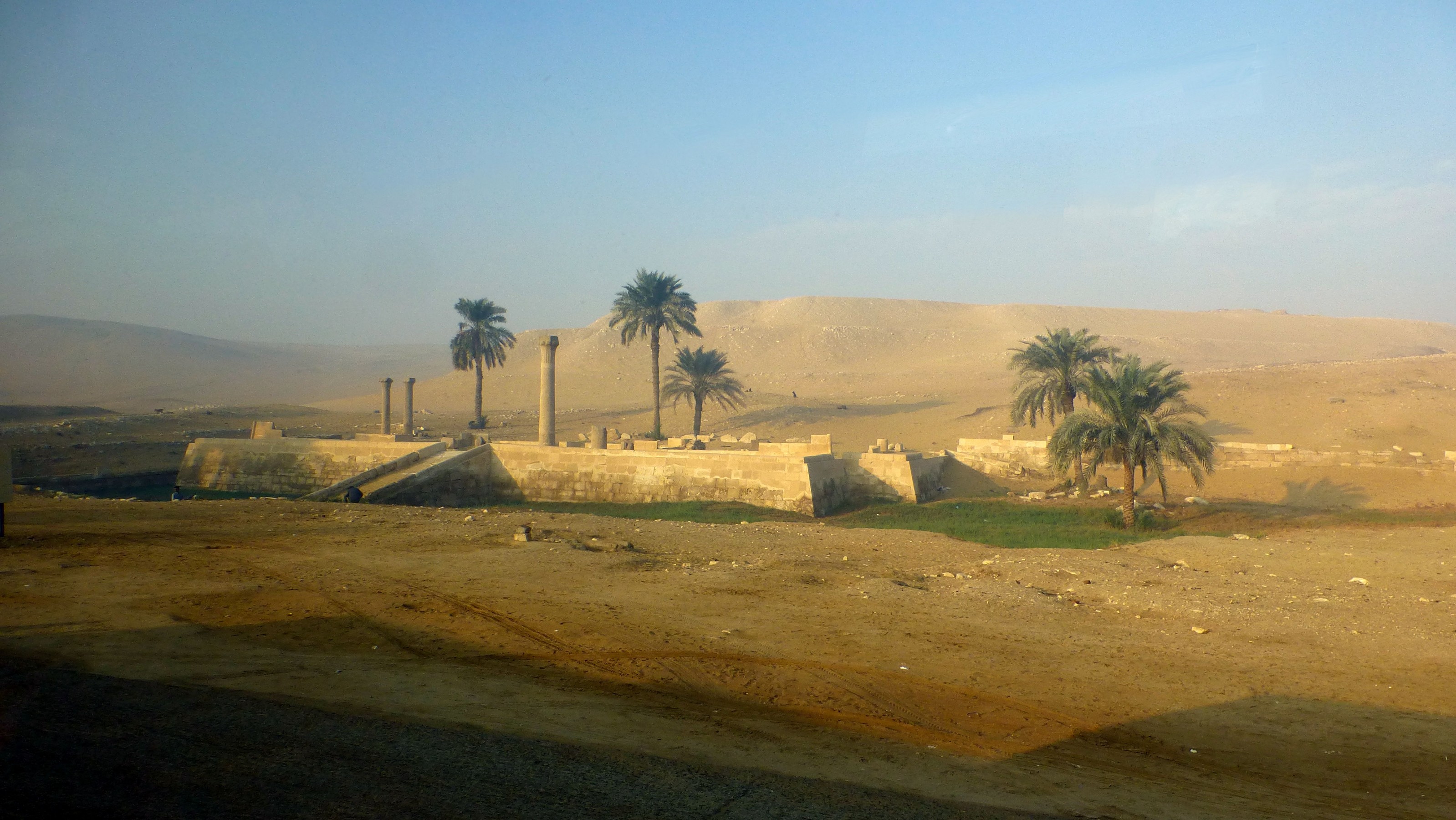
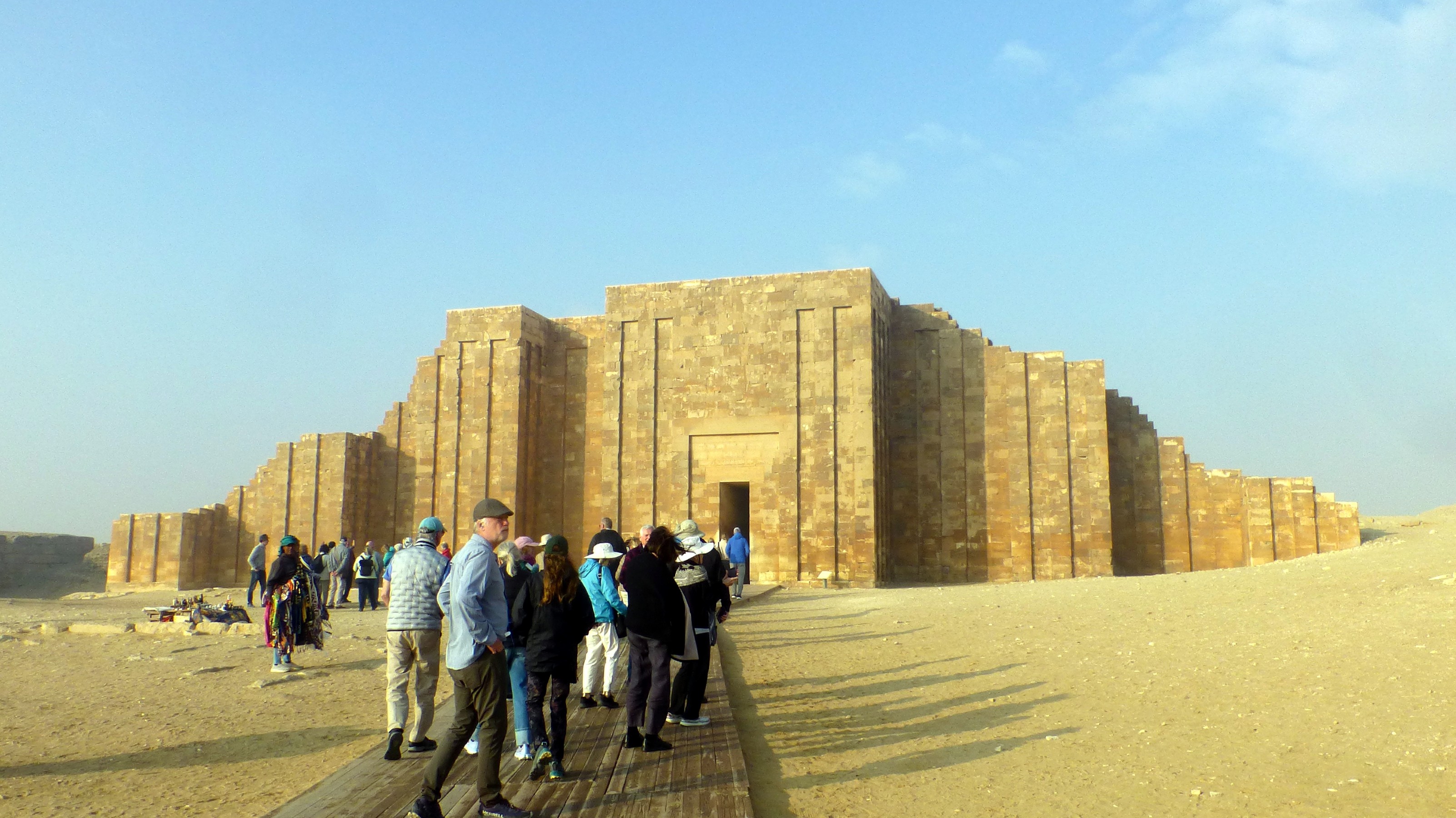
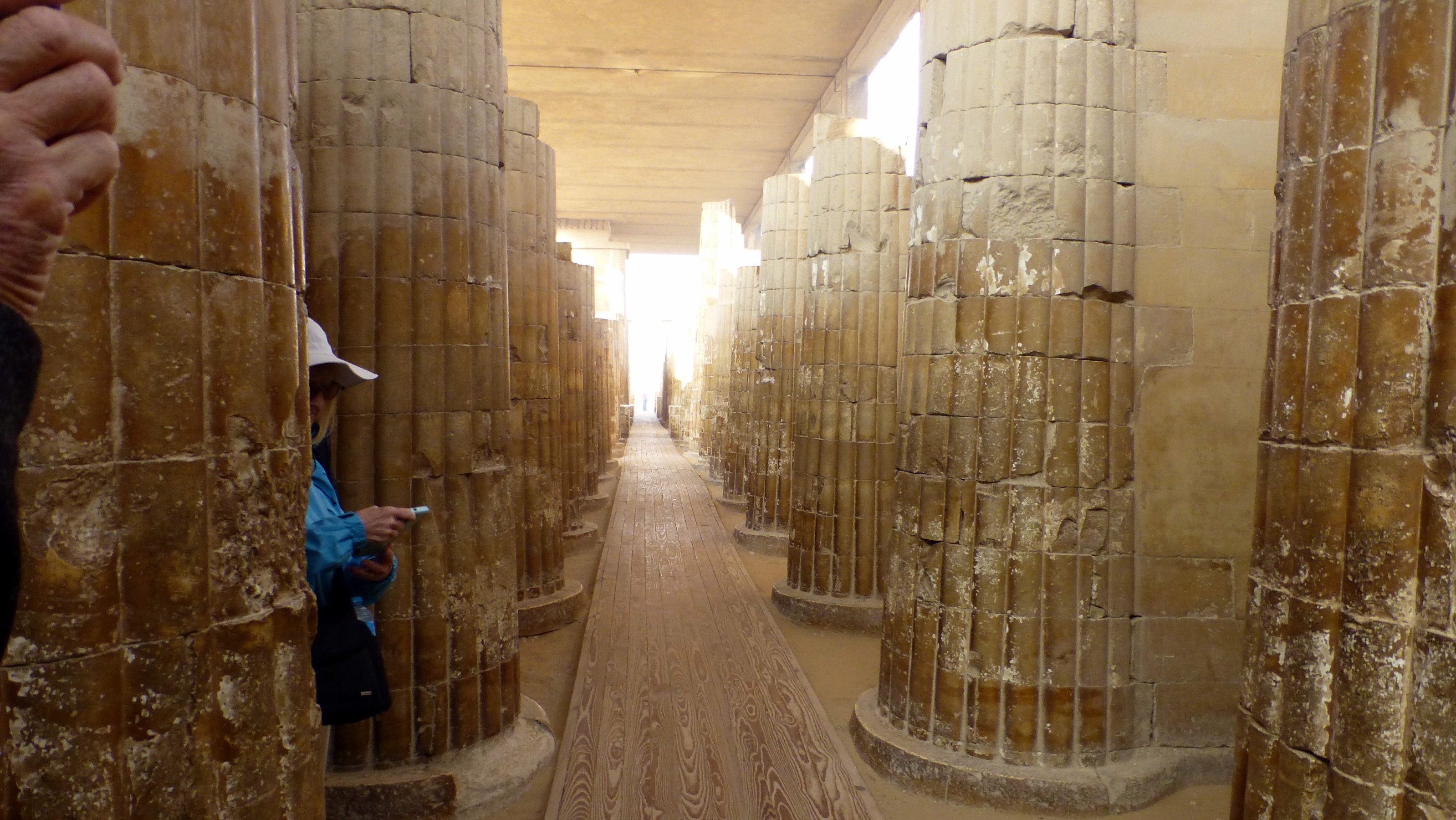
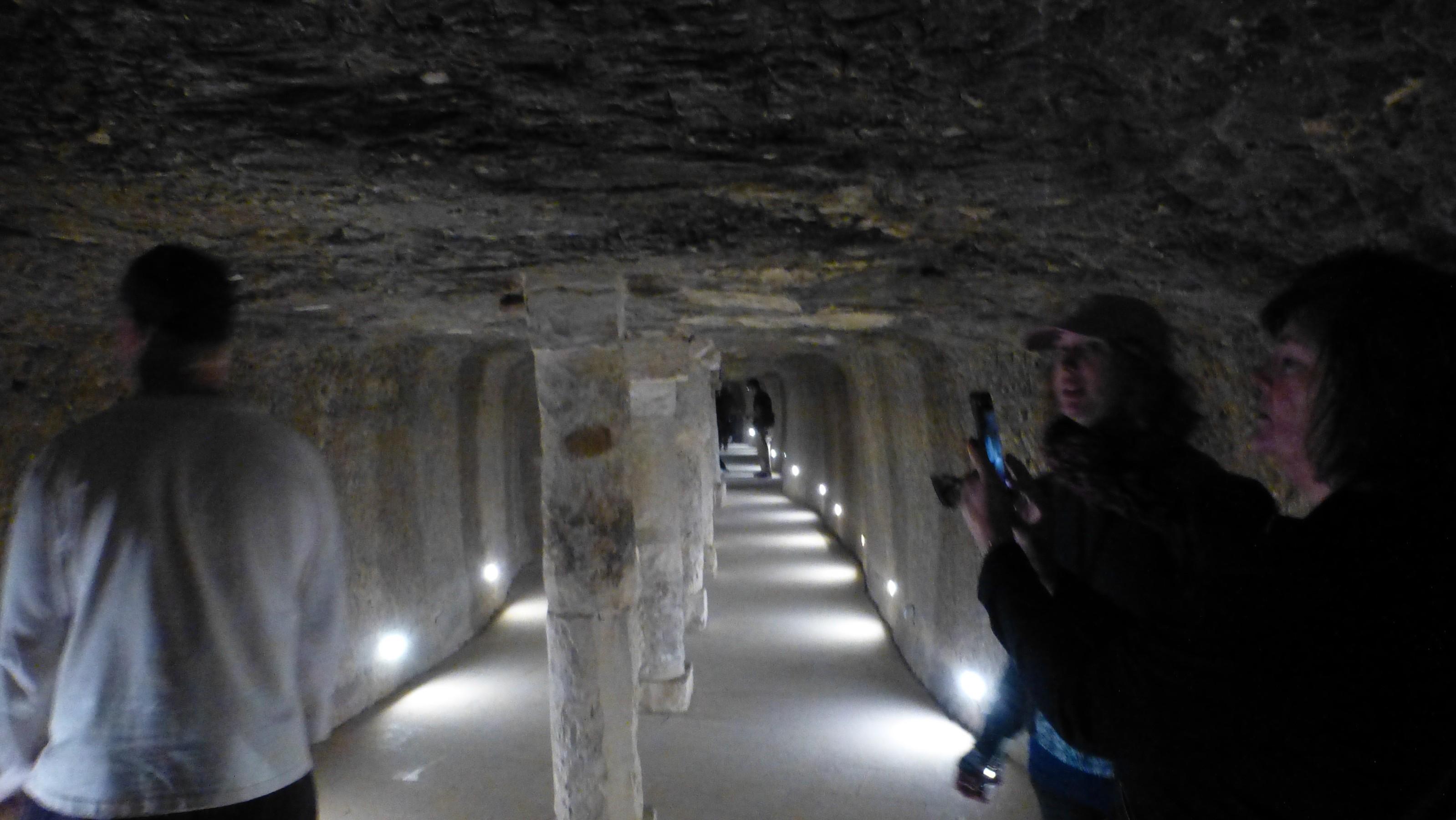
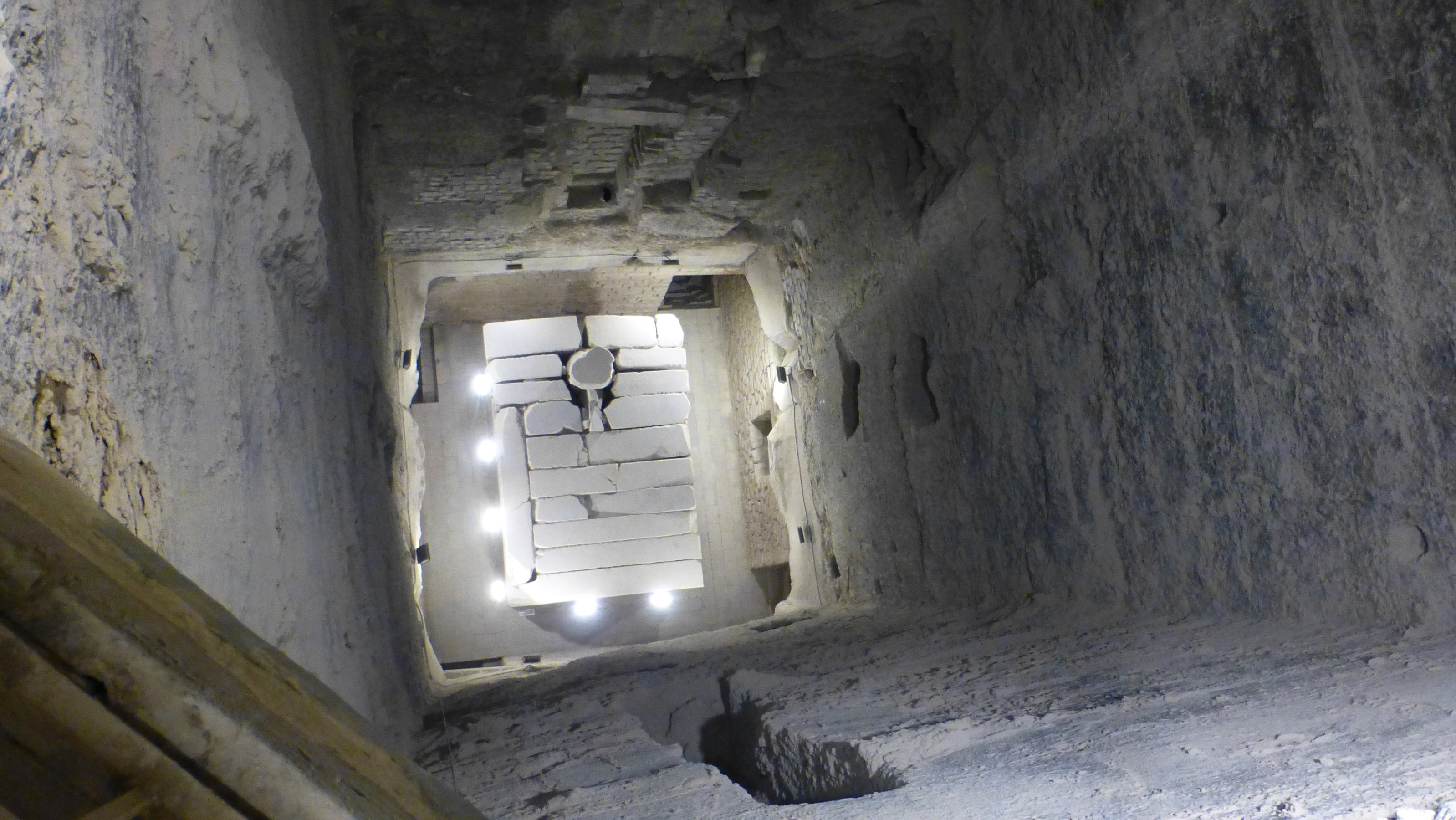
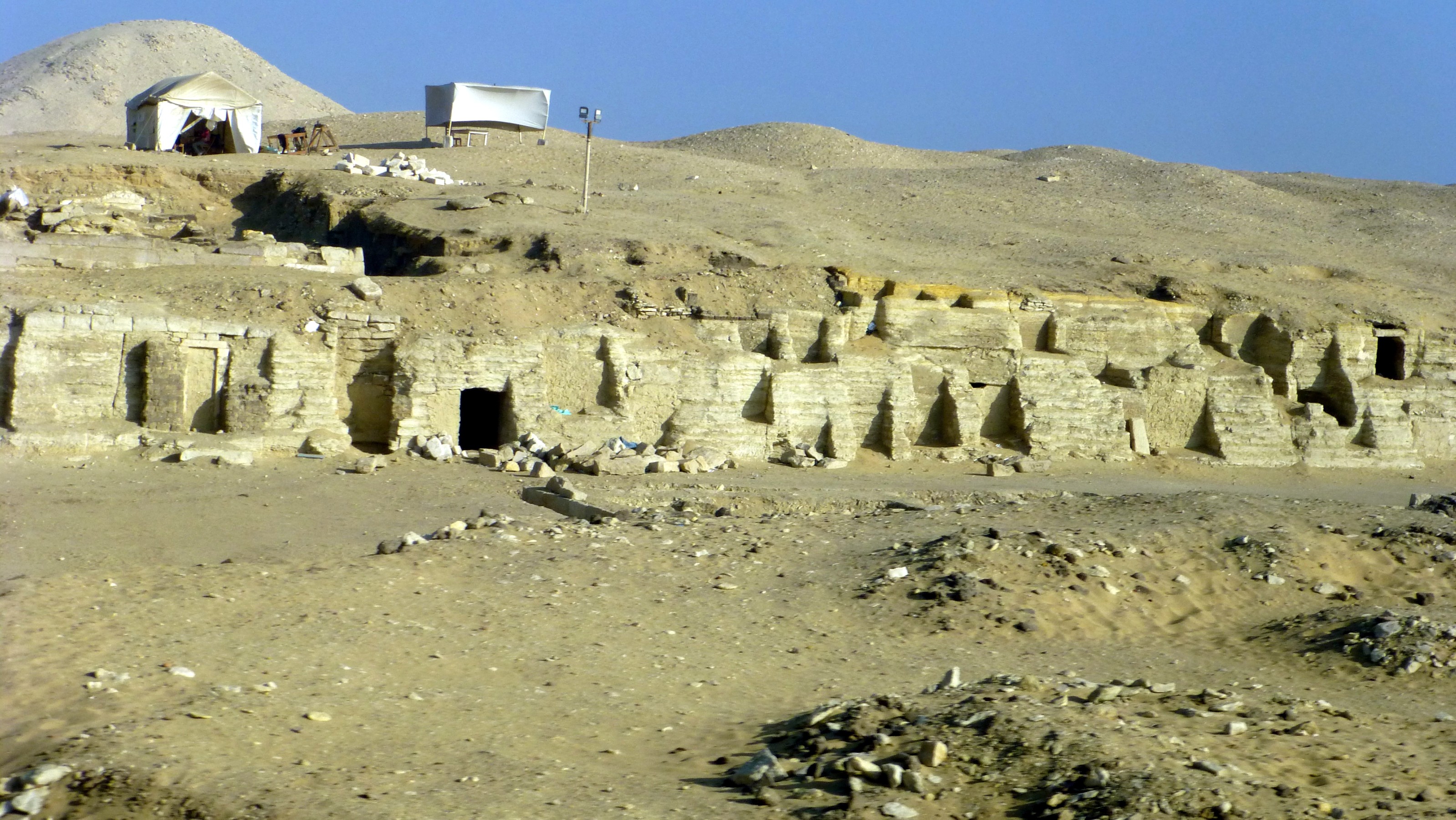
As we enter Saqqara, we passed these unknown ruins in the remaining morning mist. We enter the 34 foot high walled enclosure of the pyramid. We pass down the collonaded entrance to enter the south court of the complex. And finally the Stepped Pyramid of Djoser is revealed to us. At the base of the pyramid an entrance and walkway has been constructed to view the burial chamber. From the end of the walkway we look into the burial chamber. No body was found here as the tomb had been extensively robbed over the years. I captured this old bedouin with his camel. In the last few years, other tombs have been discovered and are being extensively excavated.
The Giza Necropolis
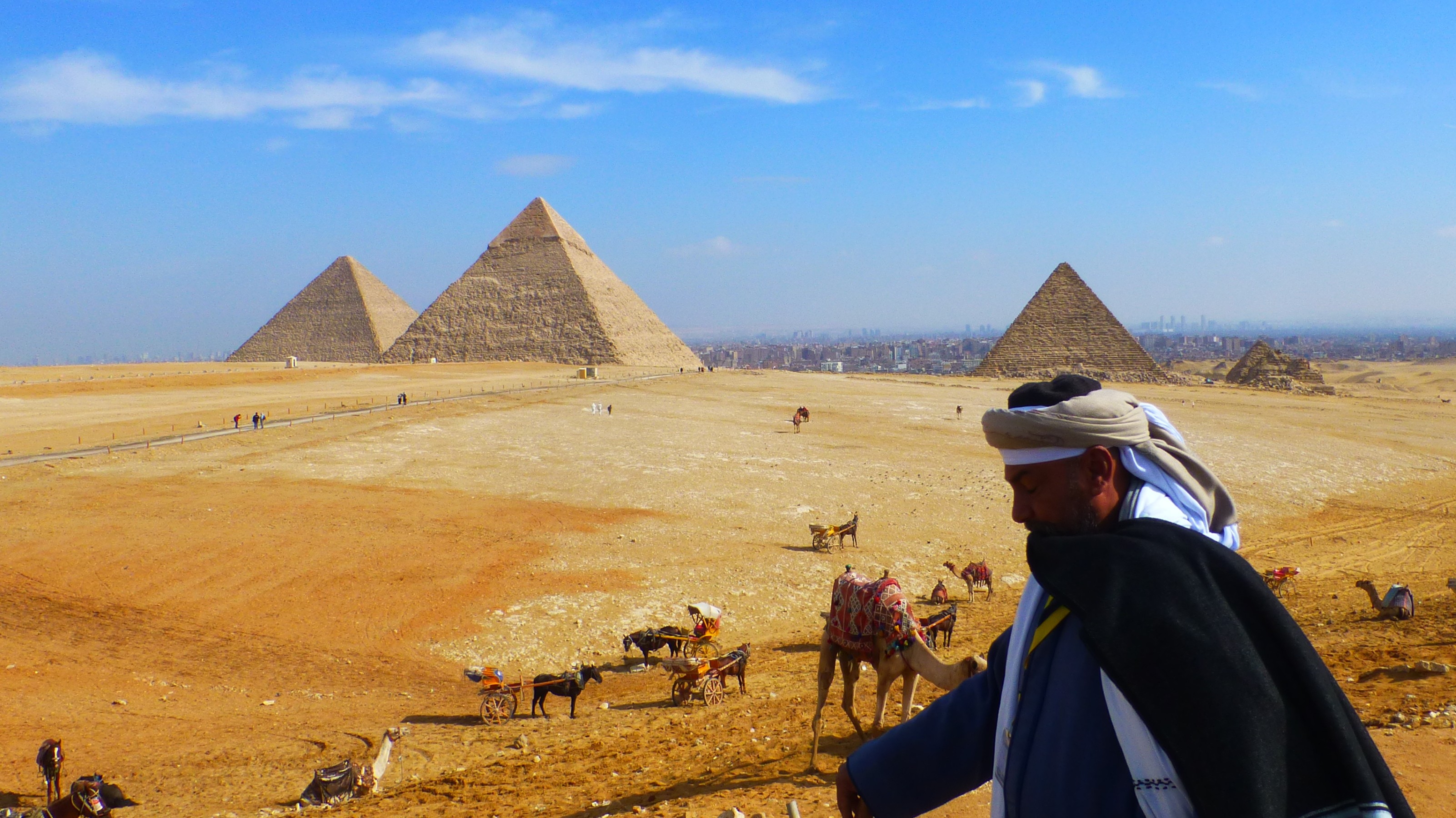
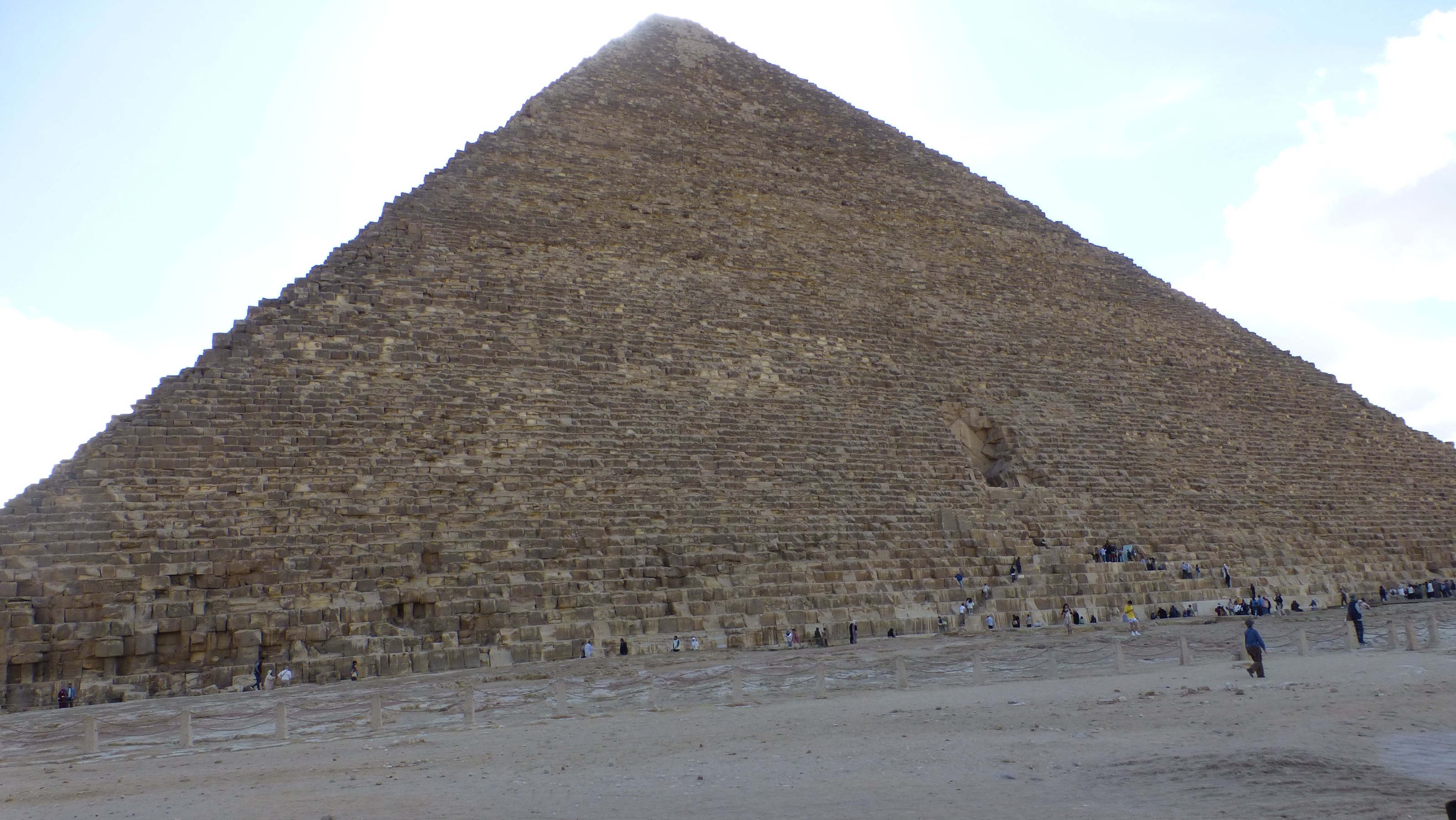
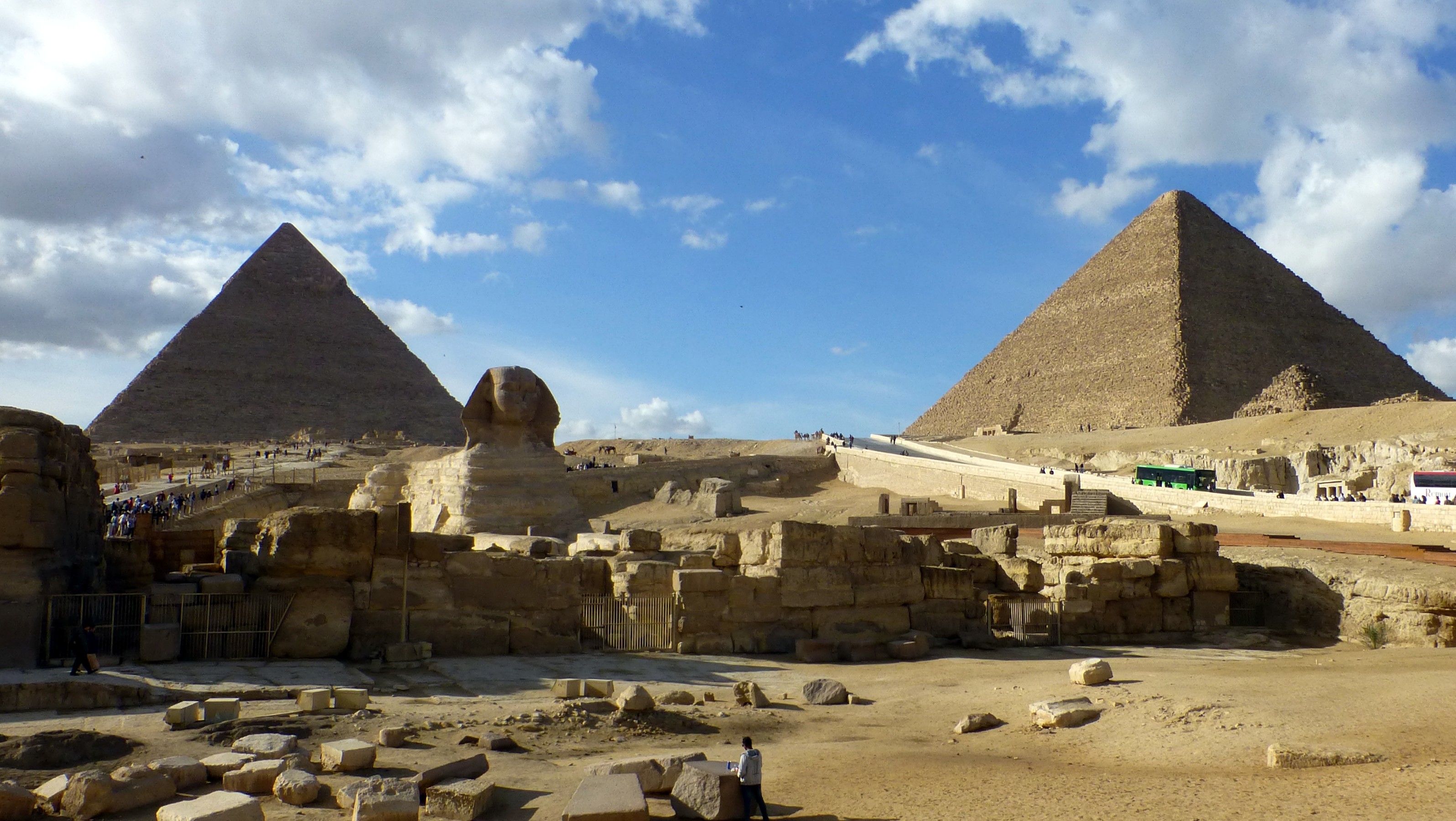
Our next is Giza Necropolis. Here we will be greeted by the only surviving of the Seven Wonders of the Ancient World, the Pyramids of Giza. Of the three pyramids, the largest, the Great Pyramid of Khufu was completed in the 26th century BC. Originally standing 481 feet and currently 454 feet in height, it claimed the record for 3800 years as the tallest man made structure until 1311 when the Lincoln Cathedral in the UK was constructed at 525 feet.

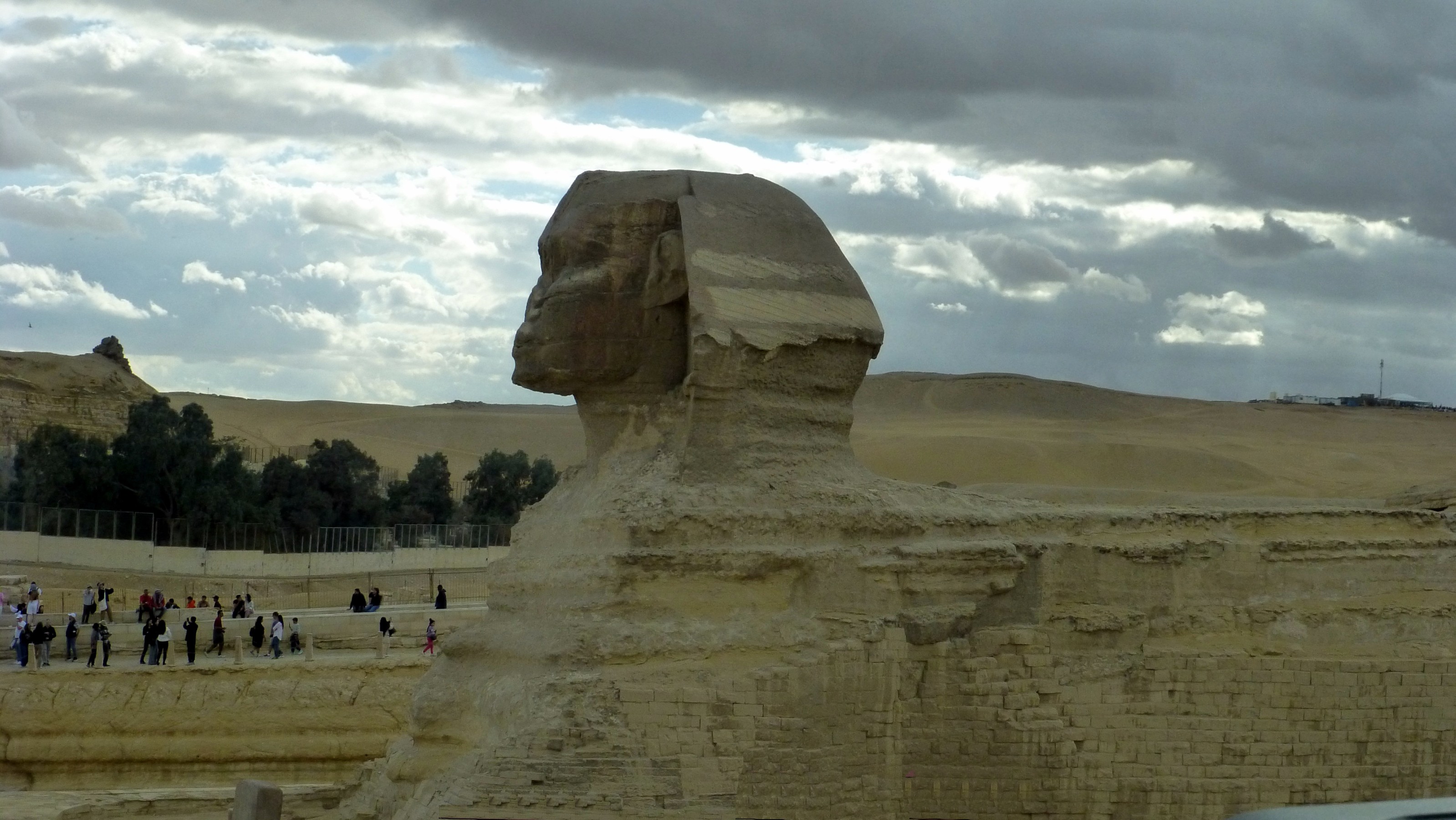
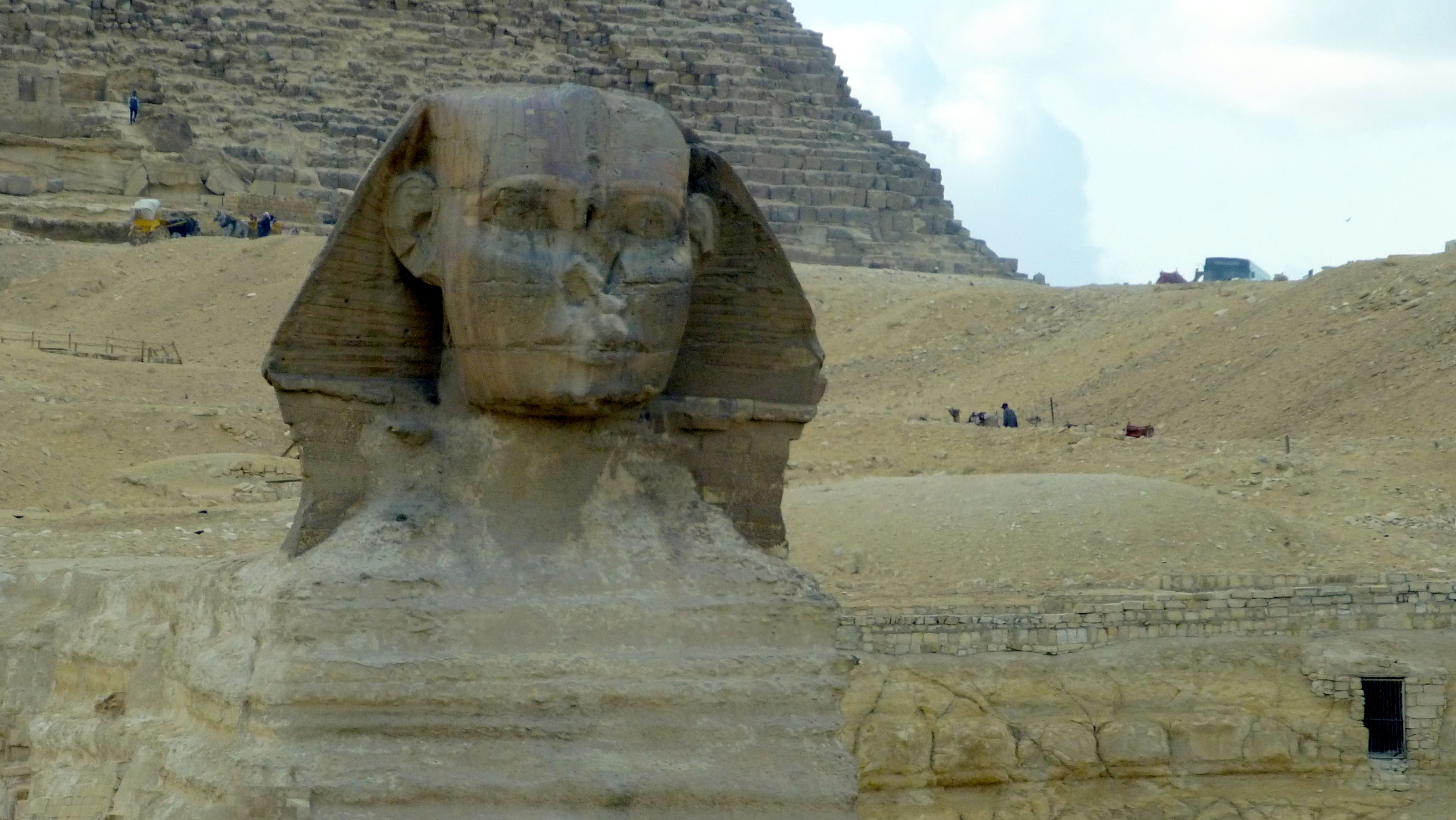
From the Pyramids we move on to Great Sphinx. With the body of a crouching lion and the head of a man, it is the largest monolith statue in the world. The Sphinx is thought to have been carved out of the living limestone in the 26th century BC during the reign of Khafre. It is thought that the face of the Sphinx was Khafre himself, but over the millennia the statue has succumbed to erosion. The rumor that the the beard and nose was shot off by Napoleon's soldiers is not true. Much of it was chiseled away many centuries earlier.
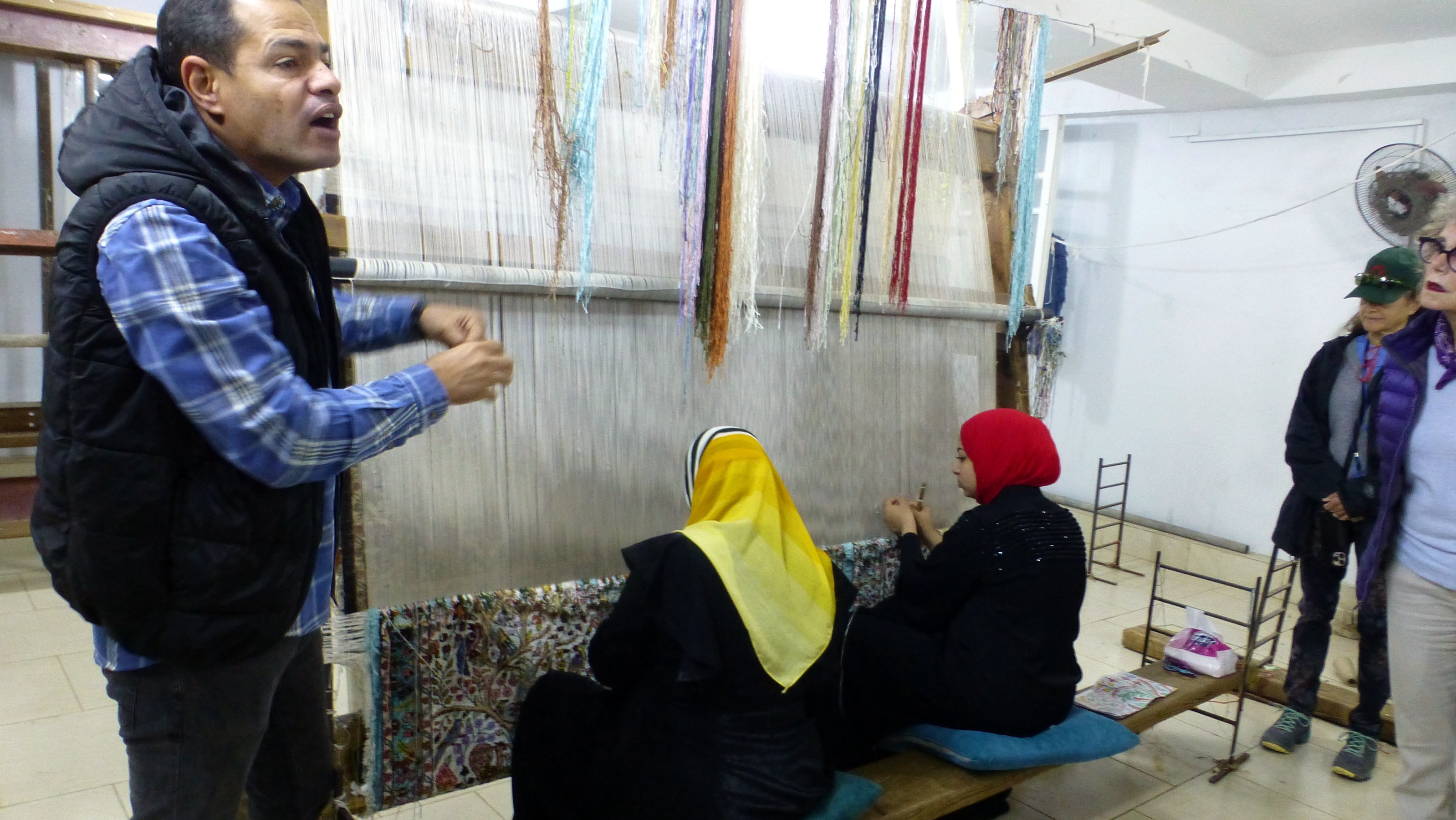
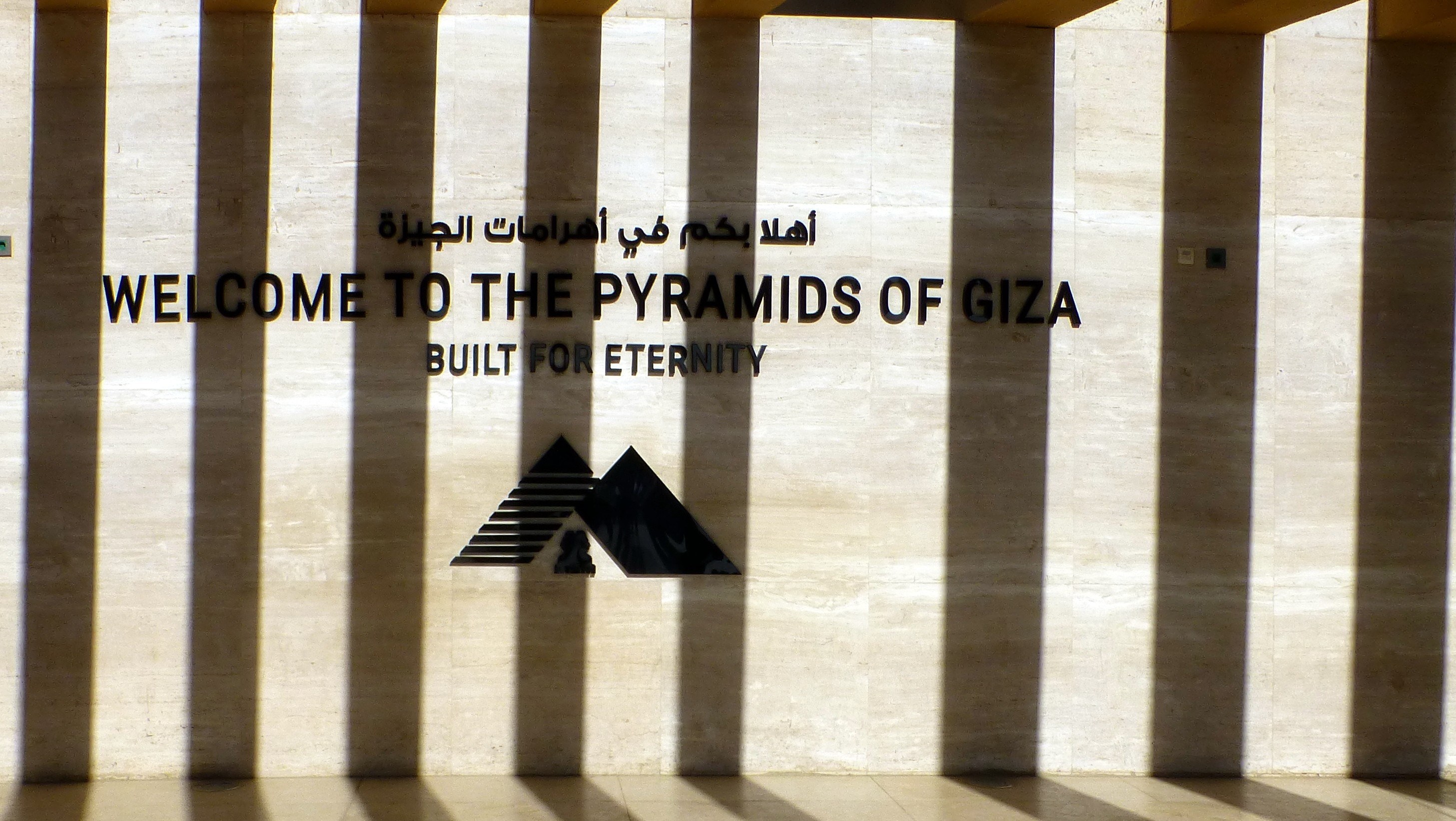
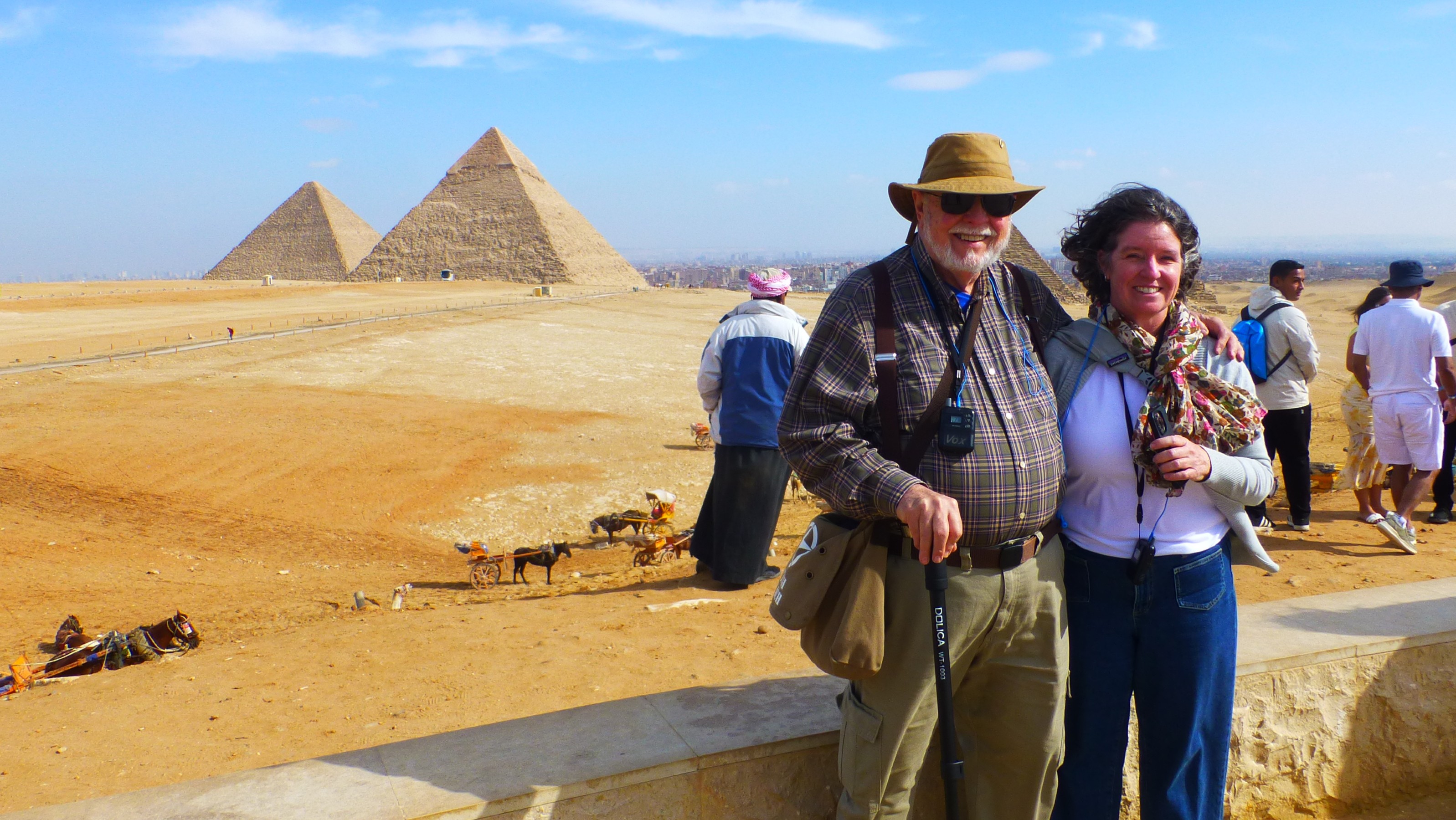
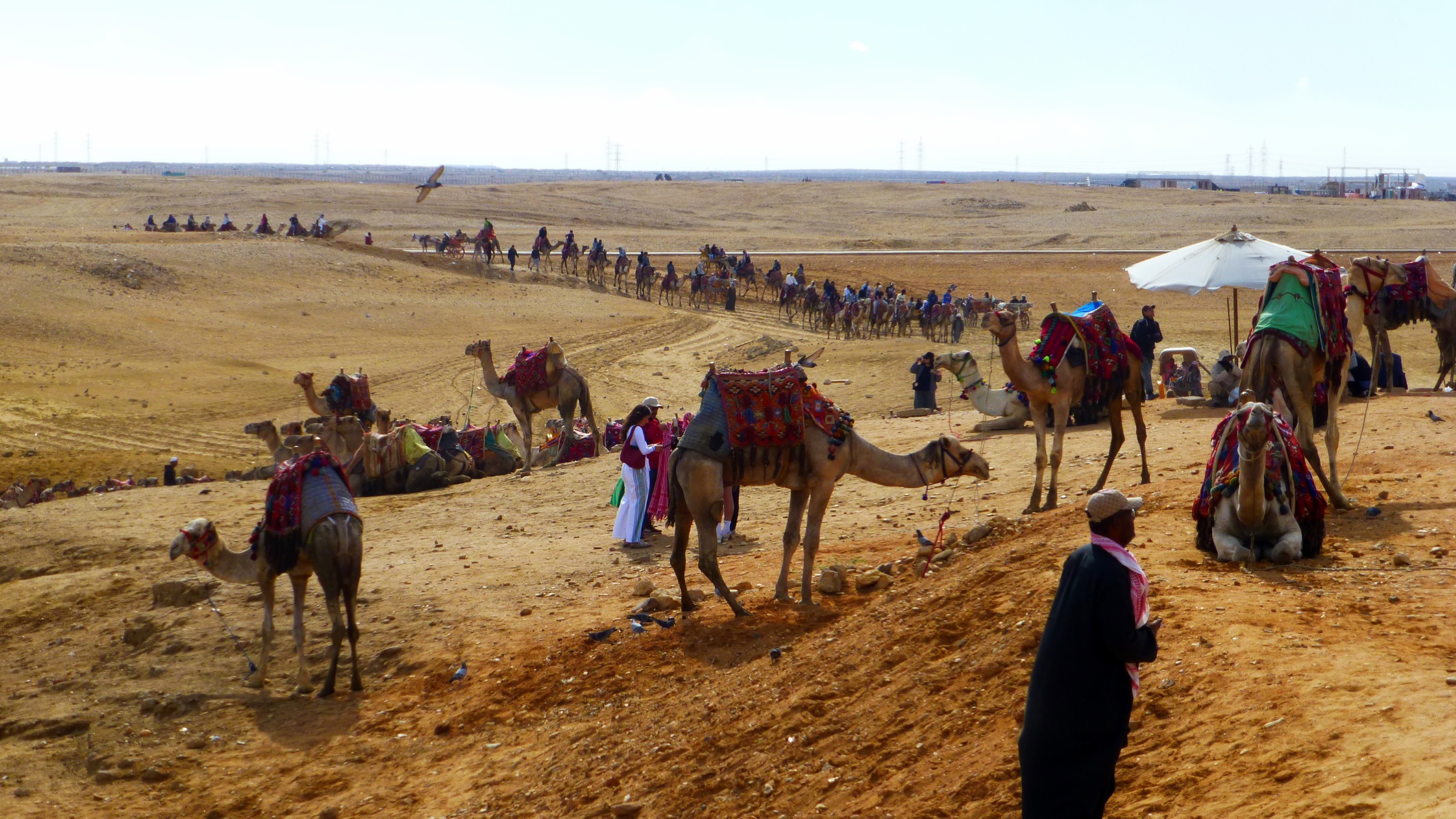
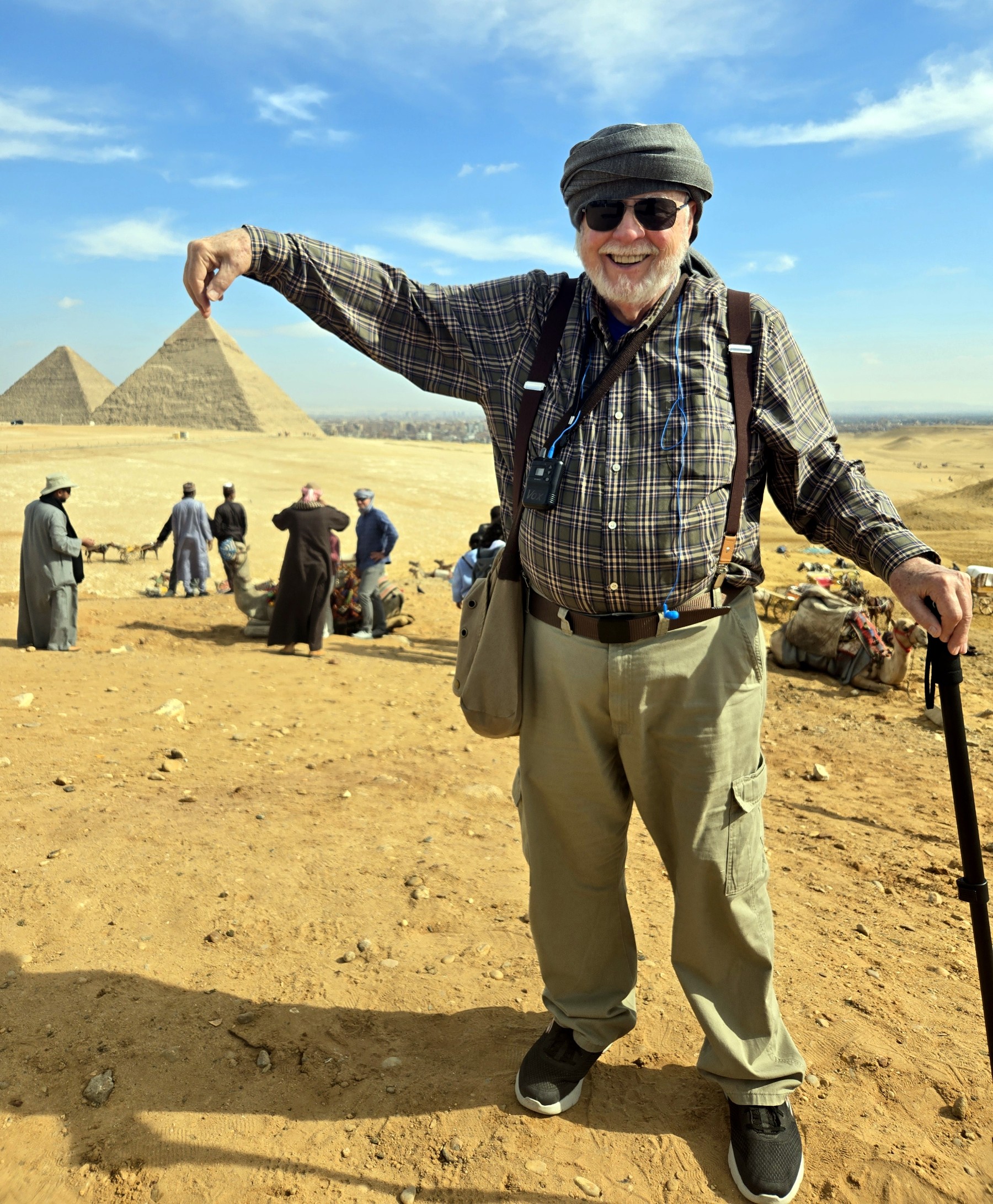
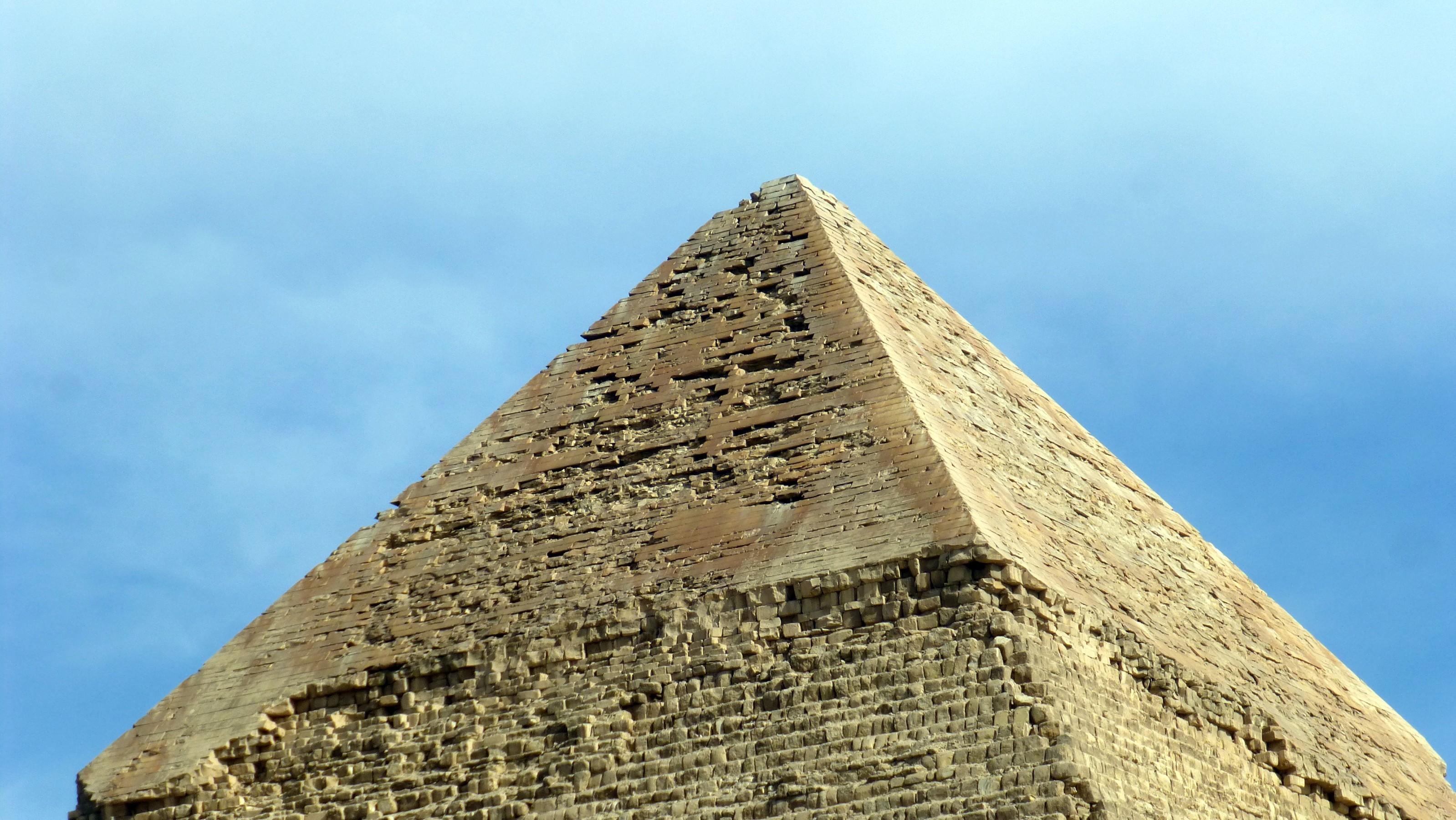
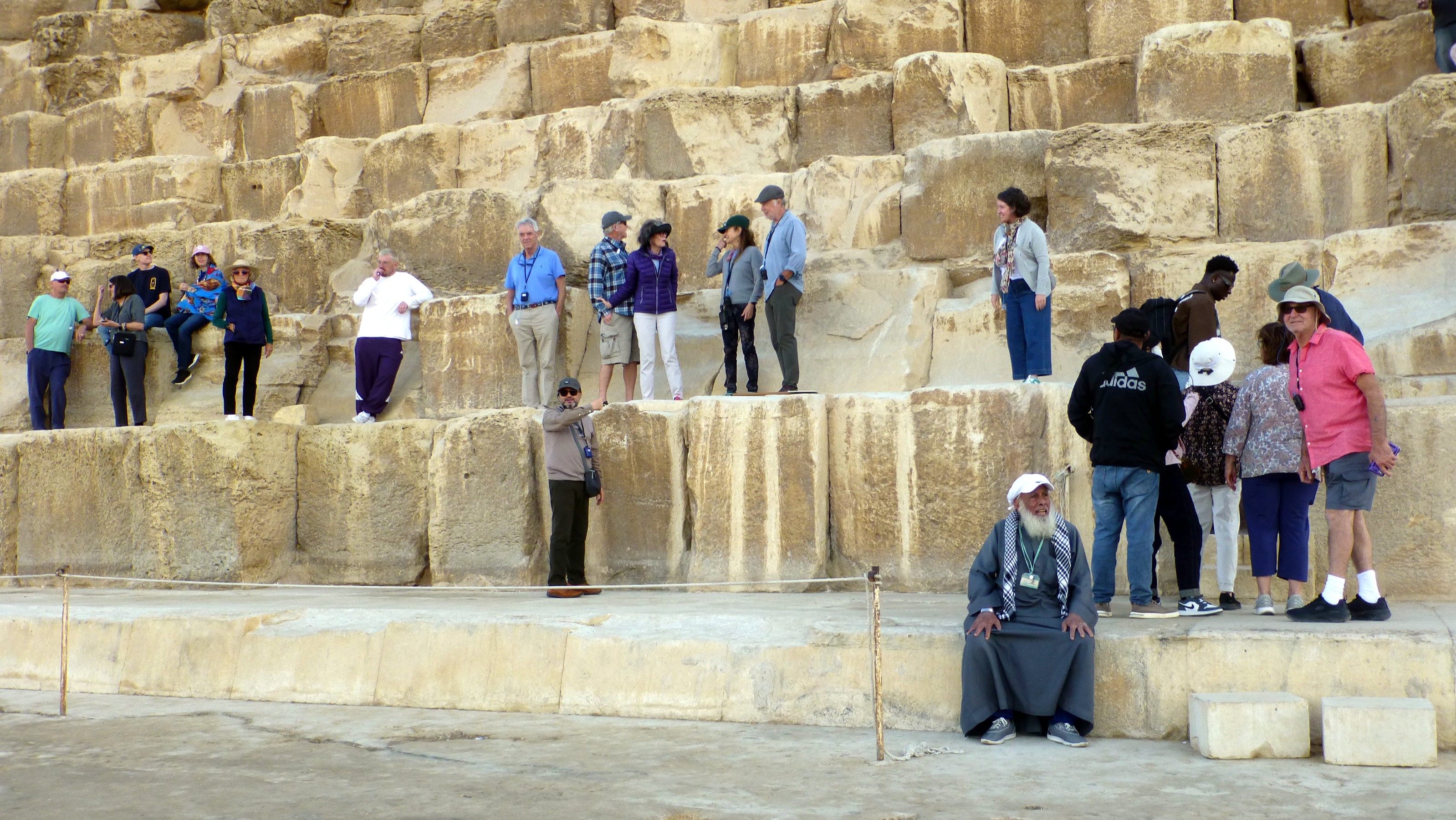
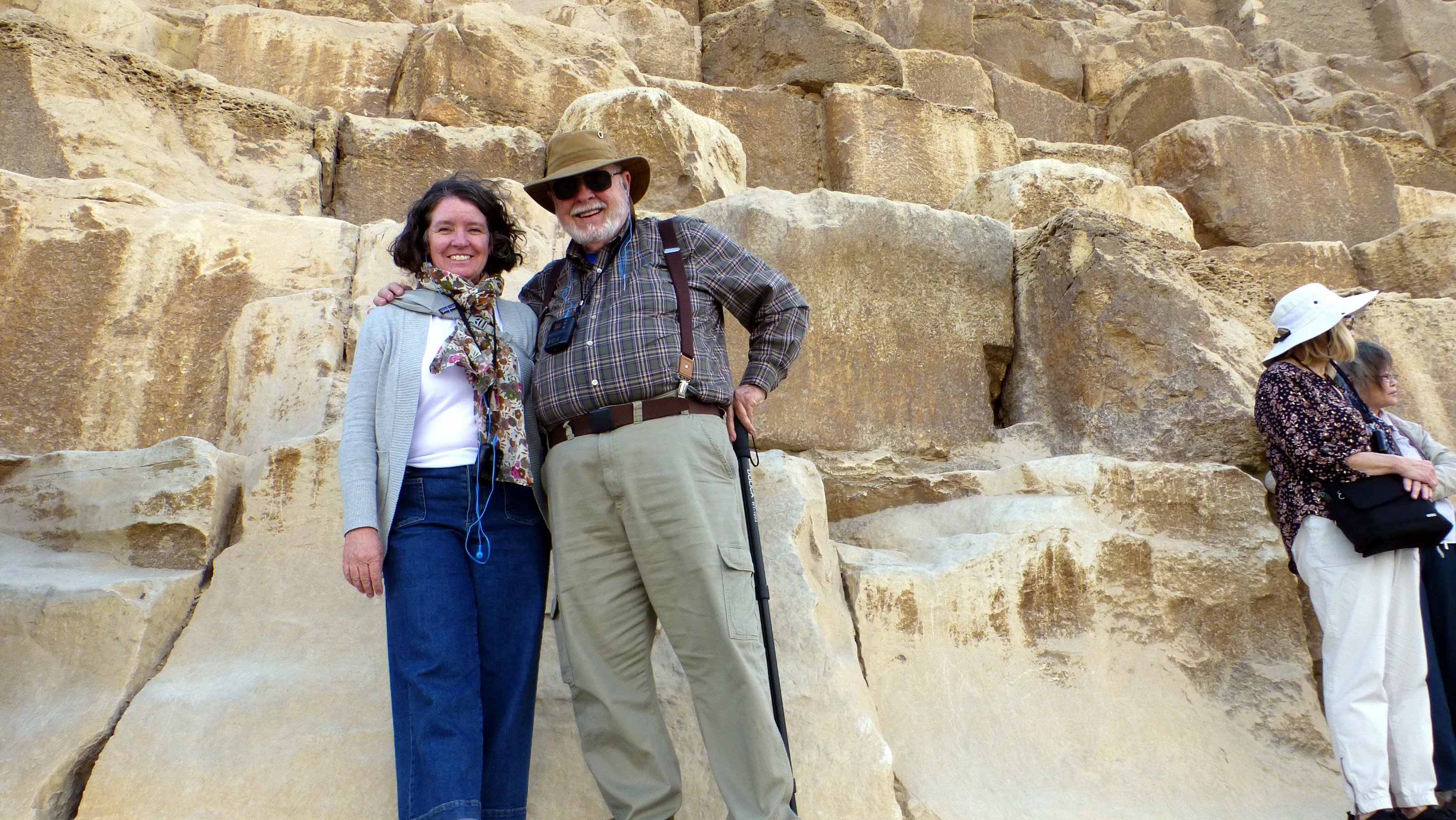
On our way to Giza we made a stop at the Akhnaton Carper School to learn how Egyptian carpets are made. Here we see two young ladies tying the intricate knots that make up a carpet. These types of intricate patterns cannot be made on a loom. Upstairs they had a hugh selection of carpets for sale. One that measured probably 30X54 was priced at $8000. Entering through the Welcome Center we were greeted by this sign. Somehow the old bedouin beat us to Giza for the first picture. Left to right is the Great Pyramid of Khufu (the perspective makes it look smaller), the Pyramid of Khafre and the Pyramid of Menkaure. Tarek took this picture of the two us. I caught this camel caravan coming from the east. Oops, it's really just a bunch of tourists that paid $20 each for the opportunity to ride a camel. Just goes to show you that things aren't always as large as they look on TV. They pyramids were constructed with sandstone and orignally overlayed with white limestone casing stones. Unfortunately, over the years most of them have been removed and used on other projects or simpley sluffed off of the sides. The cap of the Pyramid of Khafre still retains some of the original limestone offering a glimpse of their original brilliant appearance. Here Amy is perched on the first level of stone. And here I join her for a picture by Tarek. The best overall photo of the Great Pyramid that I could get. Because of it's size, I could not get far enought away to get it all. If you zoom in you will see a line of people just to the right of center climbing the pyramid. Amy and I were on the first course to the left of the line. A side view of the Sphinx san nose. While the popular story is that Napoleon shot the nose off during a battle, the truth is not so glamorous. In about 1378 Muhammad Sa'im al-Dahr,angered by local peasants making offerings to the statue, had the nose chiselled away. This disfigurement nullified the statue's power. And again you can see the disfigurement of the nose. While classic pictures of the Sphinx show him crouching in the sand seemingly isolated, the truth is different.
Return to Now
With a 6:50am departure, we will take leave of this ancient land. This has been a journey that I have thought about for year and I will not return. I will follow up in a few days with some final thoughts. Ma'a as-salama.

To return to the Splendors of Egypt & the Nile index, click here.

To Day 10 - Luxor to Cairo To Epilogue