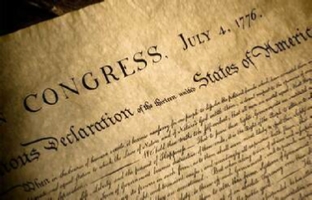


.png) Our nation was born on July 4, 1776, with the Declaration of Independence which formally severed our political ties with England. (The fact that England did not accept it turned out to be irrelevant.) Thomas Jefferson of Virginia, the primary author of the Declaration, was one of a “Committee of Five” appointed by the Second Continental Congress. The other members included John Adams of Massachusetts, Benjamin Franklin of Pennsylvania, Robert R. Livingston of New York, and Roger Sherman of Connecticut. Jefferson proposed John Adams to draft the document. However, Adams deferred to Jefferson stating that a Virginian should head the effort and, besides, he felt that Jefferson was a much better writer.
Our nation was born on July 4, 1776, with the Declaration of Independence which formally severed our political ties with England. (The fact that England did not accept it turned out to be irrelevant.) Thomas Jefferson of Virginia, the primary author of the Declaration, was one of a “Committee of Five” appointed by the Second Continental Congress. The other members included John Adams of Massachusetts, Benjamin Franklin of Pennsylvania, Robert R. Livingston of New York, and Roger Sherman of Connecticut. Jefferson proposed John Adams to draft the document. However, Adams deferred to Jefferson stating that a Virginian should head the effort and, besides, he felt that Jefferson was a much better writer.
In a twist of fate, Congress had originally pressed for Richard Henry Lee of Virginia. Lee had drafted the Lee Resolution (also known as "The Resolution for Independence") which resolved that the thirteen colonies were free and independent states. This resolution was passed on July 2, 1776. However, Lee had already been appointed to the committee to write the Articles of Confederation.
Though the Declaration consists of a mere 1,458 words, probably the most memorable, if not the most often quoted, are the thirty-
To read the Declaration of Independence in its original form, click here.


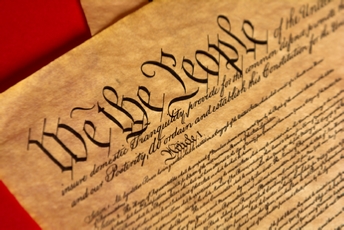
The Preamble to the Constitution sets the basis for the words that follow. After years, we have found only twenty-
The Constitution itself was ratified by Congress on June 21, 1788, when the ninth state (the minimum number required under Article VII), New Hampshire, formally ratified it. Prior to the Constitution, the former colonies had operated under the Articles of Confederation and Perpetual Union which had been enacted in early 1781. And prior to that, the Continental Congress had functioned as the provisional government.
To read the Constitution in its original form, click here.
 It’s pretty obvious that the Flew side of the family were not Patriots of the American Revolution. After all they were languishing in Long Ashton, England, probably only nominally aware of what was going on in the Americas. However, relatives through my Curtis line going back to my 22nd great grandfather, William de Ros, were intimately involved in the founding of our country. The following were all major participants in the birth of our nation...and my cousins!
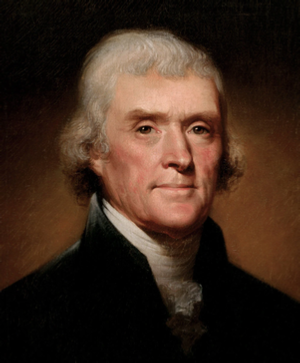
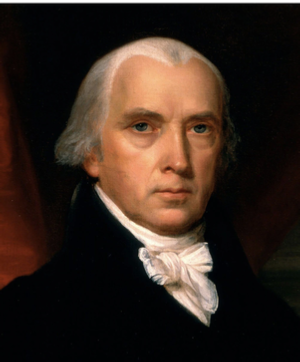
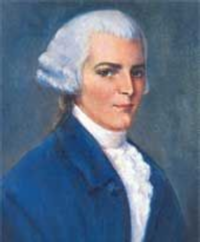
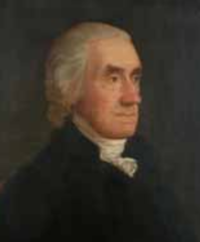
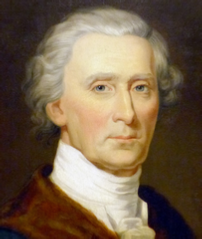
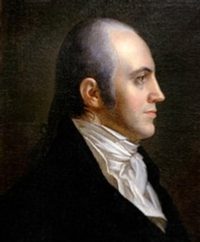
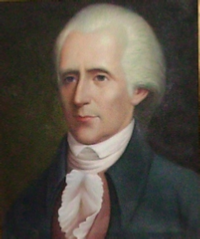
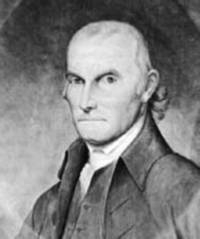
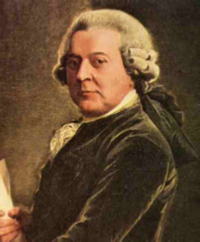
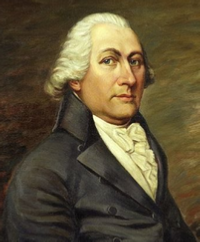
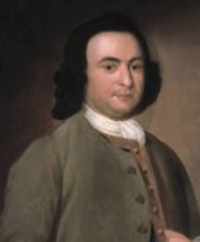

While the above were major architects of the new 13 United States, I had others who were holding the line against our English opponents.
- Sampson Powers was my 5th great grandfather. Born in 1750 in Mecklinburg Co, VA, he served as an Ensign in the Hillsborough Militia. He died in 1813 at age 60 years.
- Joseph Thacher was my 6th great grandfather. Born in 1755 in Yarmouth, Barnstable Co, MA, he served in several units during the war including Col. Nathaniel Freeman's 1st Barnstable County Regiment, Capt. Lamont's Company and Col Bradford's Regiment. He died in October of 1778. It is not clear if he died in action.
- William Thacher was my 1st cousin 8x removed. He was born in 1743 in Yarmouth, Barnstable Co, MA. He served in Capt. Lot Crowell's Company and Col Nathaniel Freeman's regiment. He was reported lost on Cape Cod in November of 1778.
- John Pittman, born in 1726 in Buckingham County, Virginia, was my 6th great grandfather. He served in Capt. Harmon Davis' Company, 4th Artillery Regiment, South Carolina. He survived the war dying in 1785.
- John Icabod Pittman Jr was born 1752 in Amelia County, Virginia. My 5th great grandfather, the son of John Pittman. He served as a matross in Capt. Harmon Davis' Company, 4th Artillery Regiment, South Carolina. He died in 1831 in Gwinnett County, Georgia.
The song we know today as our National Anthem, “The Star-Spangled Banner”, was not adopted as such until 1931 when the U.S. Congress passed a joint resolution making it the official national anthem of the United States. Prior to that there was no official anthem.
Composed by Philip Phile in 1789 for the first inauguration of George Washington and titled "The President's March", it became the song “Hail, Columbia” in 1798 when it was combined with lyrics by Joseph Hopkin. Used as a de facto national anthem through the 19th century, it lost popularity after WWI. For many years it was used to announce the arrival of the President but was ultimately replaced by “Hail to the Chief”. It is now the official Vice President's personal anthem. To hear a rendition of “Hail, Columbia”, click here.
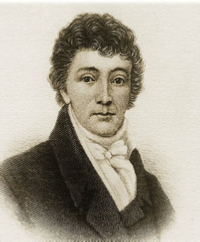
Francis Scott Key was an American Lawyer and Patriot and amateur poet. On September 13, 1814, amid the War of 1812 with England and but a month after they had torched the White House, Key found himself aboard the HMS Surprise where he had negotiated the release of several prisoners of war. When they attempted to return to shore, they were detained because they had learned too much regarding the upcoming attack on Fort McHenry in Baltimore Harbor.
Because of the formidable guns of the fort, the British fleet was forced to fire from their maximum range.
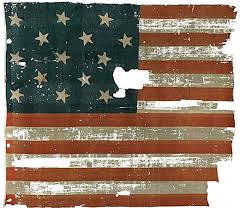 Over the next 25 hours, the British fired over 700 rockets and up to 1800 bombs, included air burst shells, on Fort McHenry. Hampered by the weather and because of the distance and resulting inaccuracy of the British guns, the Americans suffered only 28 casualties, including four killed in action. As night closed on Key, he observed that the small “storm flag”, a 17 by 25 foot banner continued to fly above the fort.
Through the night Key observed the red glare of the rockets launching as well as the bursting shells above the fort. On the morning of the 14th, he arose to find that the storm flag had been lowered and the large 30 by 42 foot garrison flag had been raised with the dawn. This flag, later to be known as the Star-Spangled Banner, had been made by Mary Young Pickersgill and consisted of 15 stars on a blue field with fifteen red and white stripes. (Later the official American flag was defined as a blue field with one star for each State and 13 stripes to represent the original Thirteen States ratifying the Constitution.)
Key was so inspired by the sight of the flag flying above the fort that he immediately began to pen the lyrics to his tribute poem on the back of a letter that he had kept in his pocket. Late in the afternoon of September 16, he and his POWs were released by the British. They arrived in Baltimore and that evening took a room at the Indian Queen Hotel where he completed the untitled poem.
Key handed his poem to this brother-in-law, Joseph H Nicholson. The next day, September 17, Nicholson took the poem to a Baltimore printer where it was printed as a broadside and was given the title "Defence of Fort M'Henry".
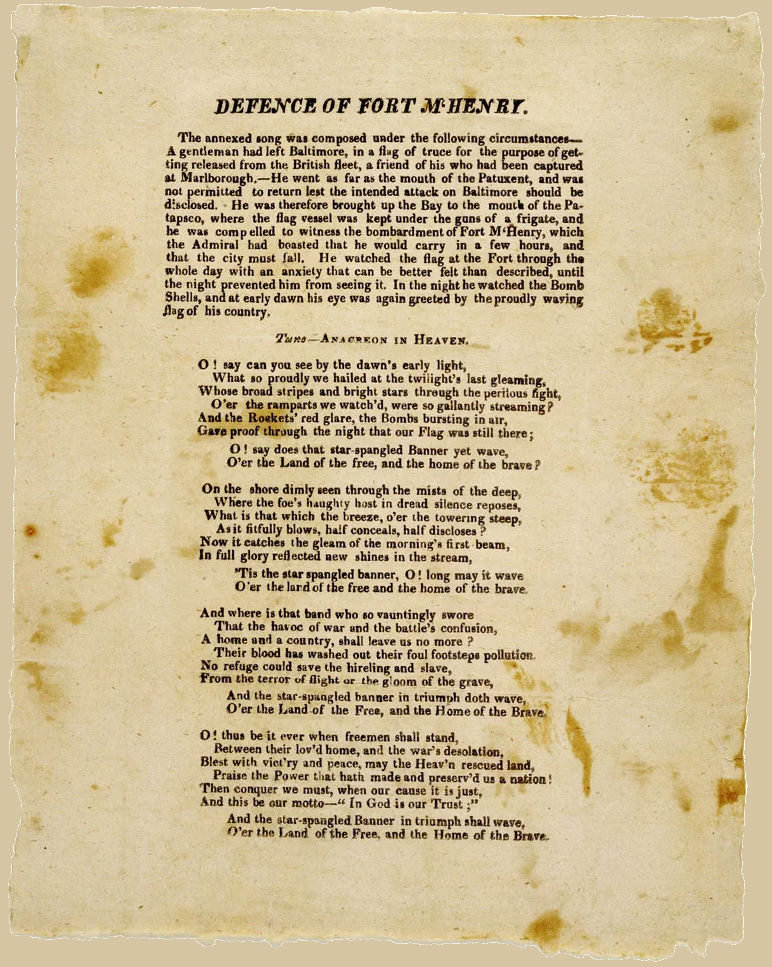 Today only two copies of the broadside are known to exist. The song was first published nationally in The Analectic Magazine.
It was Nicholson who put the words to the popular melody "The Anacreontic Song". Written by English composer John Stafford Smith, the song was the official song of the Anacreontic Society, an 18th-century gentlemen's club of amateur musicians in London. Although it was described as a “drinking song”, it was not a barroom ballad as is commonly repeated. In the early 20th century, President Woodrow Wilson asked the US Bureau of Education to provide an official version of the song. This version, that we know today, first premiered at Carnegie Hall on December 5, 1917.
In 1889, the U.S. Navy officially adopted "The Star-Spangled Banner". "The Star-Spangled Banner" was first proposed as our national anthem by Col Caleb Carlton at Fort Meade, South Dakota, in 1892, and in 1916, President Woodrow Wilson ordered that it be played at military and other appropriate occasions. The anthem was first played at a baseball game during the seventh-inning stretch of Game One of the 1918 World Series. Between 1918 and 1929, John Charles Linthicum, the U.S. congressman from Maryland at the time, introduced a series of six unsuccessful bills to officially recognize "The Star-Spangled Banner" as the national anthem and on November 3, 1929, Robert Ripley published a cartoon in Ripley's Believe it or Not!, saying "Believe It or Not, America has no national anthem".
In 1930, the Veterans of Foreign Wars initiated a petition for the United States to officially recognize "The Star-Spangled Banner" as the national anthem and received five million signatures! Finally, the US House of Representatives passed the bill later that year and on March 3, 1931, the Senate passed the bill. On March 4, President Herbert Hoover signed the bill officially adopting "The Star-Spangled Banner" as the National Anthem of the United States of America.
In recent years, some “Americans” have called for replacing our blessed anthem for a number of reasons including its war-oriented imagery and its perceived elitism, sexism and racism. Unfortunately, our country was conceived in the bosom of war; after all, England was not about to give up the resources and promise of this great land without a fight. As for the other, while our early foundations included social norms that are no longer acceptable, the words still define our nation and the fact that, despite all of our shortcomings, this is still the freest and most promising nation to ever exist on this earth.
When I hear "The Star-Spangled Banner" played I'm proud to say that I still get a lump in my throat and goose bumps on my arms. And when played at the Olympic Games, I do not find that any other country’s anthem contains the dignity and grandeur of our National Anthem.
In the following video, the U.S. Army Field Band and Chorus presents the “The Star-Spangled Banner” on the Battlements and Field of Fort McHenry.
The following is reprinted from 8 Hottest Tech Trends in 1776 by Shelly Palmer, CEO, The Palmer Group:
A little more than ago, our forefathers used the best technology available to inspire colonial proto-
But while all this was going on, there were a bunch of entrepreneurs and a few startups that changed the world. In the 1770s, America was a relatively low tech, agrarian society, but as you can see from the list below, all that was about to change. So here, for your Independence Day reading pleasure, are the eight hottest tech trends circa 1776.
1. Underwater Warfare
The Submarine – A ship called “The Turtle” was invented by David Bushnell to secretly attach explosives to the undersides of British s
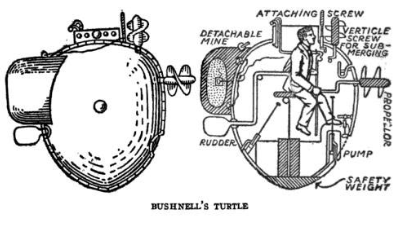 hips without being noticed. George Washington wasn’t a fan of The Turtle (he thought it was “ungentlemanly”), but still okay’d its use – only to see it unsuccessful in its three attempts to destroy British ships. While “The Turtle” wasn’t a success in and of itself, it was promising enough to lead to further research and development that would one day yield effective underwater vessels.
2. Telling Accurate Time
The Chronometer – One major invention of the 18th century was the marine chronometer – a clock that was accurate enough to use as a portable time standard “to determine longitude by means of c
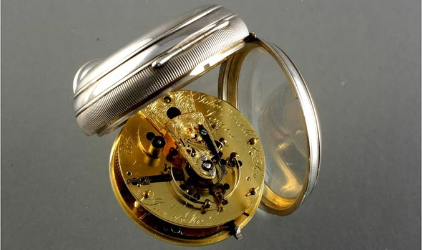 elestial navigation.” Although the chronometer was first invented in 1737 by John Harrison, who spent more than 30 years of his life on its design, a few Europeans: Pierre Le Roy, Thomas Earnshaw and John Arnold brought it to market. In 1775, Arnold was working on improvements for the device, and took out his first patent for improvements to the device on December 30, 1775.
3. Underwater Exploration
Scuba – Englishman Andrew Becker created a leather-
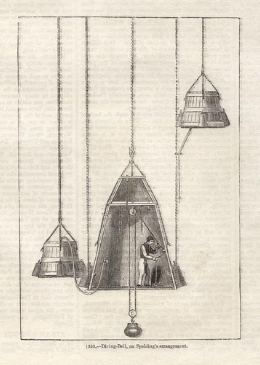 Becker showed off his device in the River Thames in London, where he was able to breathe underwater for an hour. Around the same time, a French inventor named Fréminet had designed a compressed air reservoir as part of a breathing machine that dragged along behind a diver or mounted on his back. Becker and Fréminet’s inventions were examples of the earliest scuba gear. At the same time, Charles Spalding (of Scotland) developed an improvement to the diving bell by adding a system of balance-
4. Indoor Plumbing
The Toilet – The modern flush toilet was first proposed in 1596 by Sir John Harrington, but it never truly caught on. However, thanks to the Industrial Revolution, the flushable toilet began to emerge in the late 18th century. Alexander Cummings of Scotland invented the S-
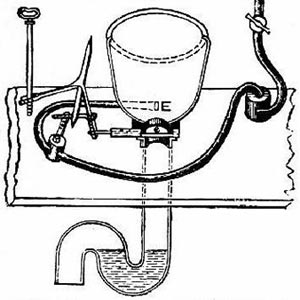 in our toilets today. The S-
5. High Tech Major Appliances
The Kitchen Stove – The Franklin stove, a metal-
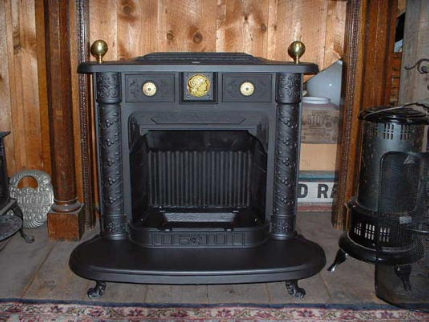 ver an open fire without dealing with the smoke that traditionally accompanied that process. Up until Franklin’s inventions, most meat was cooked on a turnspit.
Kitchens in the 18th century also saw a lot of improvements because of rolled sheet iron. Better utensils, fire grates, and the clockwork spit all became possible thanks to this “advanced” metalwork.
6. Electricity
The Lightning Rod – Another one of Franklin’s inventions from the same era would forever change the world of power and energy. In 1749, Franklin
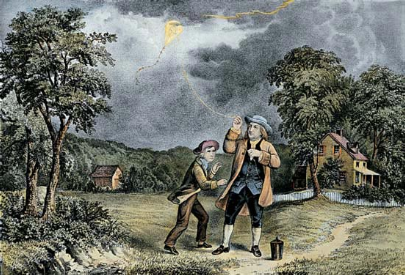 invented the lightning rod. Other scientists shared his theory about a link between electricity and lightning, but Franklin’s invention allowed him to be the first to test his hypothesis. His invention saved thousands of lives and millions of dollars worth of buildings. Back then, a lightning strike usually resulted in a conflagration.
7. Mechanical Motion
Steam Engines – While mankind has used boiling water to produce mechanical
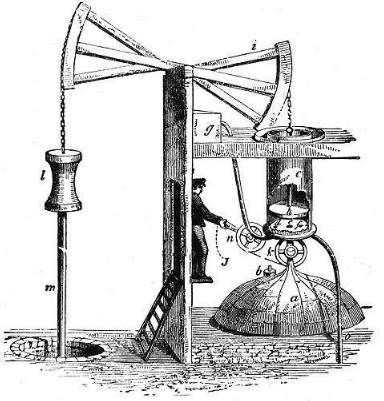 motion for thousands of years, the first steam engine wasn’t patented until 1606. Thomas Newcomen designed the first commercially successful steam engine in the early 1700s, but it was relatively inefficient and used mainly for pumping water. In 1769, James Watt developed an improved version of Newcomen’s engine by adding a separate condenser. Watt continued to work on his design over the next several years, ultimately improving it enough to turn it into a valuable device for manufacturing and helping advance the Industrial Revolution.
There are some who believe, myself included, that harnessing steam
 power was the single most impactful technological advancement in history – it allowed humans to multiply the power of their muscles by thousands of times. We are on the cusp of the next great transition as we teach machines to multiply the power of our brains by millions or billions of times.
8. Multitasking
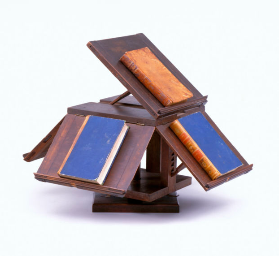
Revolving Bookstand – Many of us think of multitasking as a recent trend, but at least one of our founding fathers, Thomas Jefferson, had a need to consume information from multiple sources at “breakneck” speed. According to the Monticello Classroom, “as many as five books could be placed on this bookstand, which was probably made at Monticello according to Jefferson’s design.”