


We began our day with the buffet breakfast and a cup of American coffee. Unfortunately, American coffee appears to be something like a double espresso to which water is added to get to just over halfway up the cup. I really miss the large cup of strong, but weaker than espresso, black coffee that I drink every morning. However, the eggs were soft scrambled (yes scrambled) and the bacon was excellent. Still, I missed the coffee.
Checking out, we set Our Lady to take us directly to Pompeii, approximately 20 minutes from the Holiday Inn. Bypassing the parking along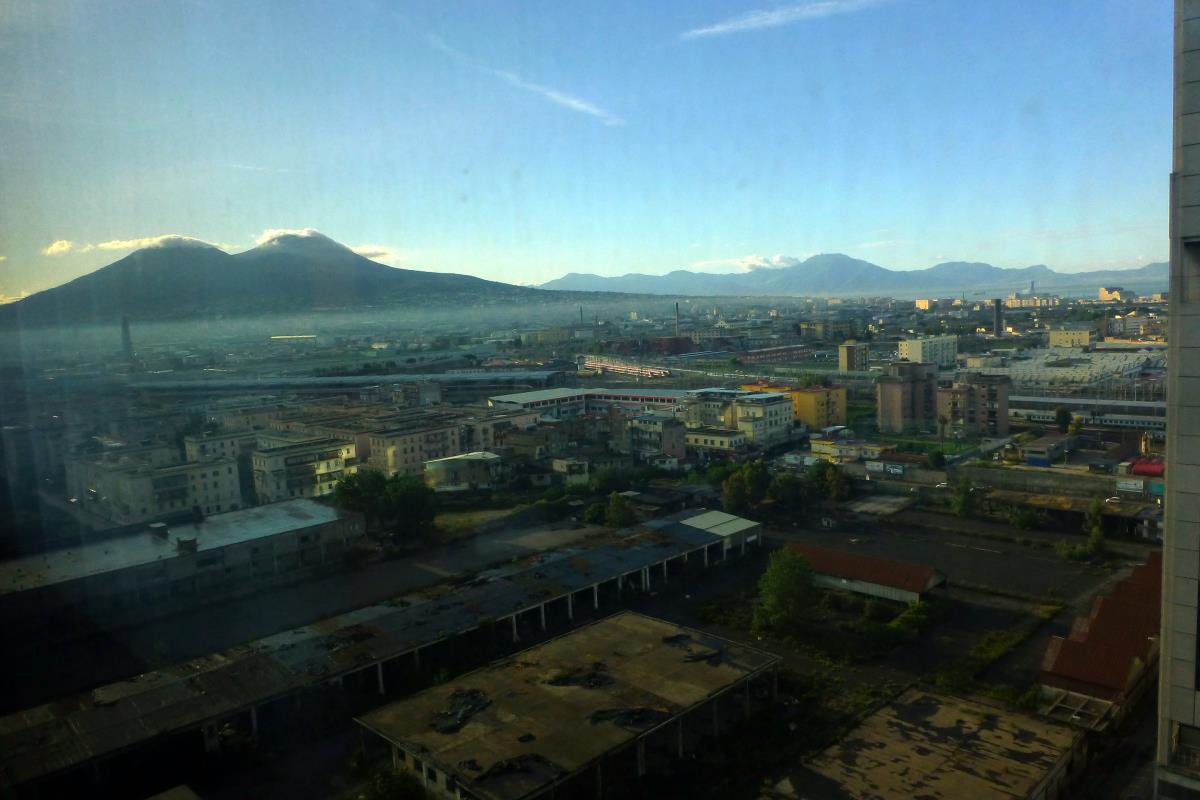 the way, I took the road directly to the entrance where I found a parking space in a lot just a few minutes walk from the front gate. When we left, the cost was only €4, so I was quite pleased.
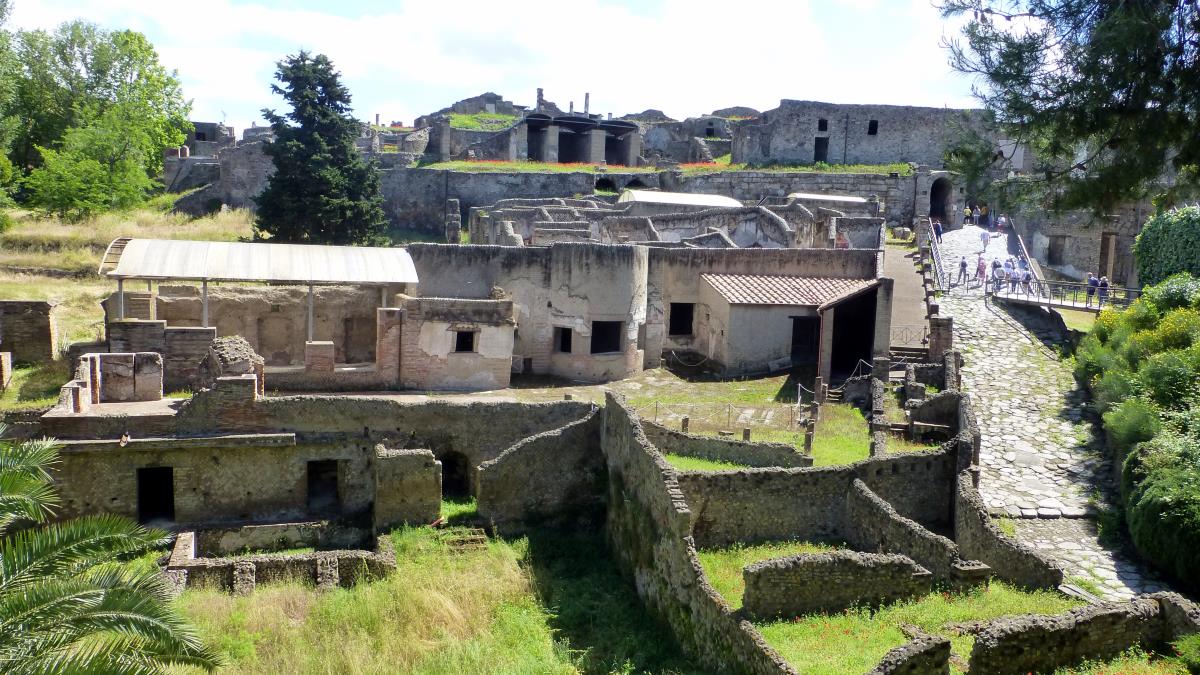
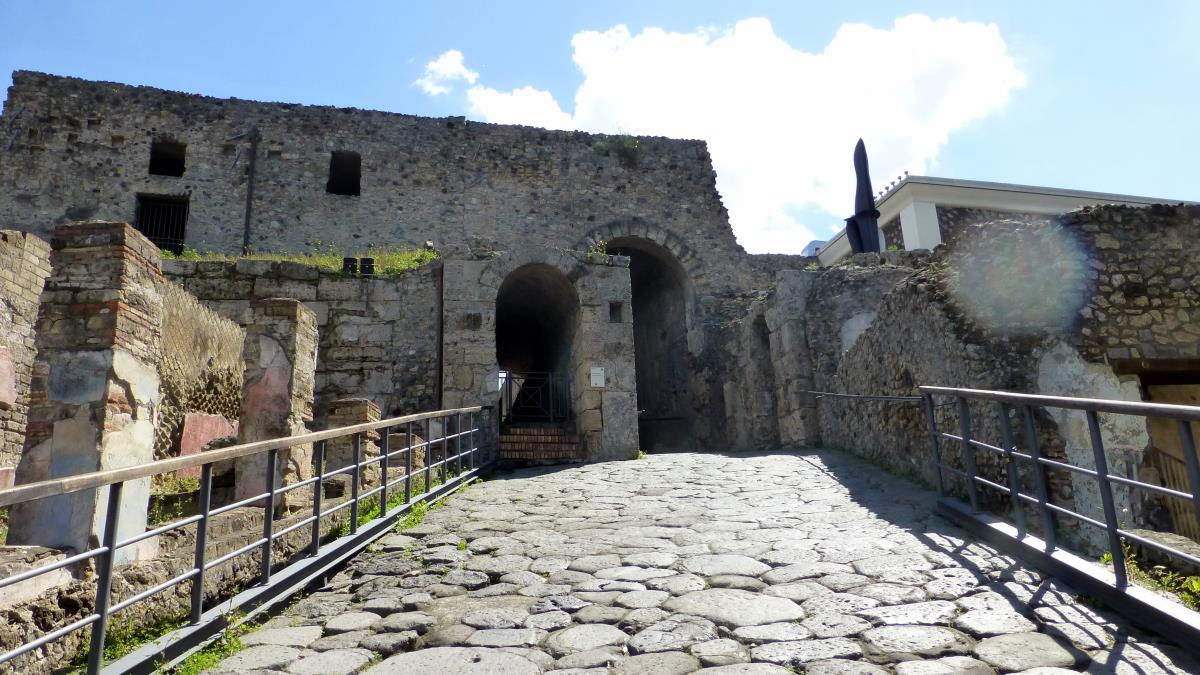
We found the ticket line to be short and were soon making our way through what had once been the thriving city to 11,000 people. Pompeii is believed to have been founded in the 6th or 7th century BC, coming under the domination of Rome in the 4th century BC. The city was destroyed in the eruption that occurred on August 24, 79AD. As fate would have it, this was one day after Vulcanalia![]() , the festival of the Roman god of fire, Vulcan. While early theories stated that the inhabitants died from ash suffocation, recent studies indicate that most of the population died from the pyroclastic flows traveling at around 450 mph and achieving 480°F. Inhalation of this gas would have resulted in instantaneous death.
, the festival of the Roman god of fire, Vulcan. While early theories stated that the inhabitants died from ash suffocation, recent studies indicate that most of the population died from the pyroclastic flows traveling at around 450 mph and achieving 480°F. Inhalation of this gas would have resulted in instantaneous death.
The city was discovered in 1599 during the digging of an underground channel to divert the river Sarno. However, the discovery was covered up and it was not until 1748 that it was rediscovered as a result of intentional excavations to become the attraction it is today.
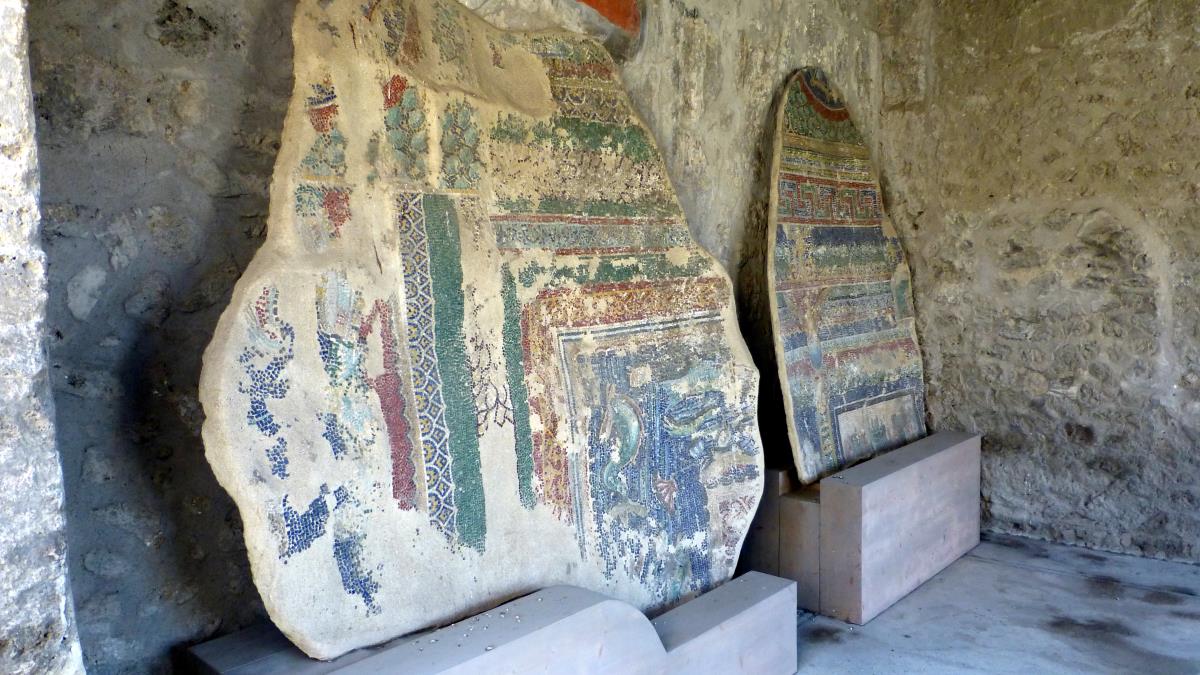
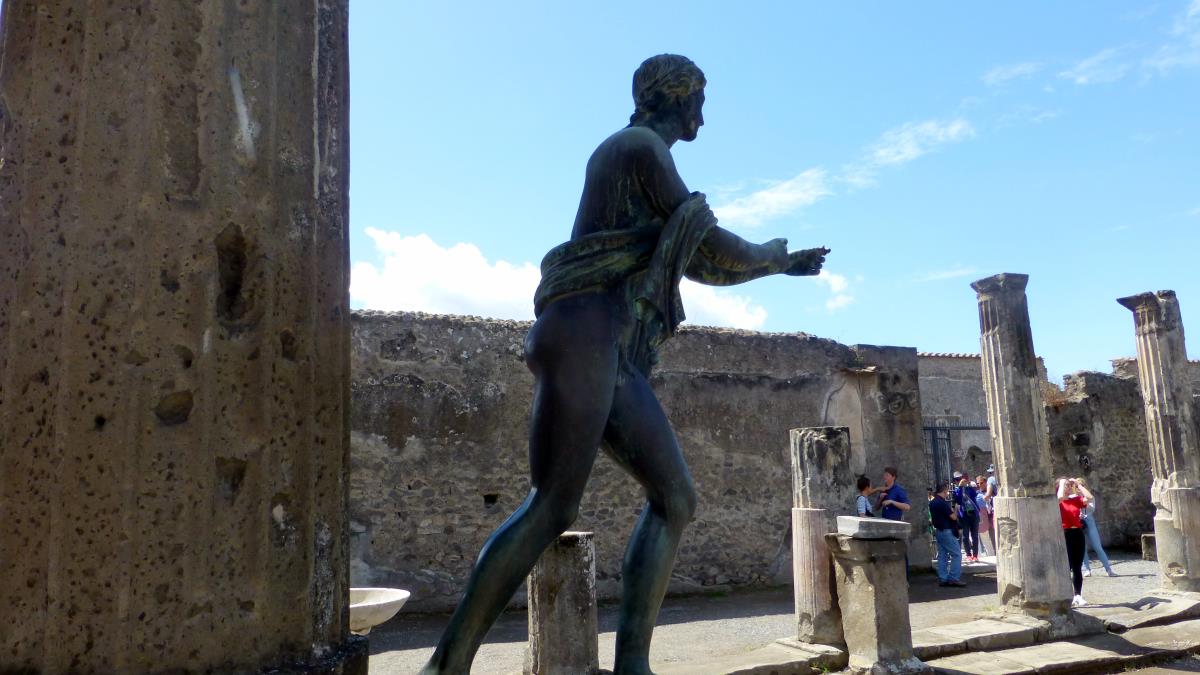
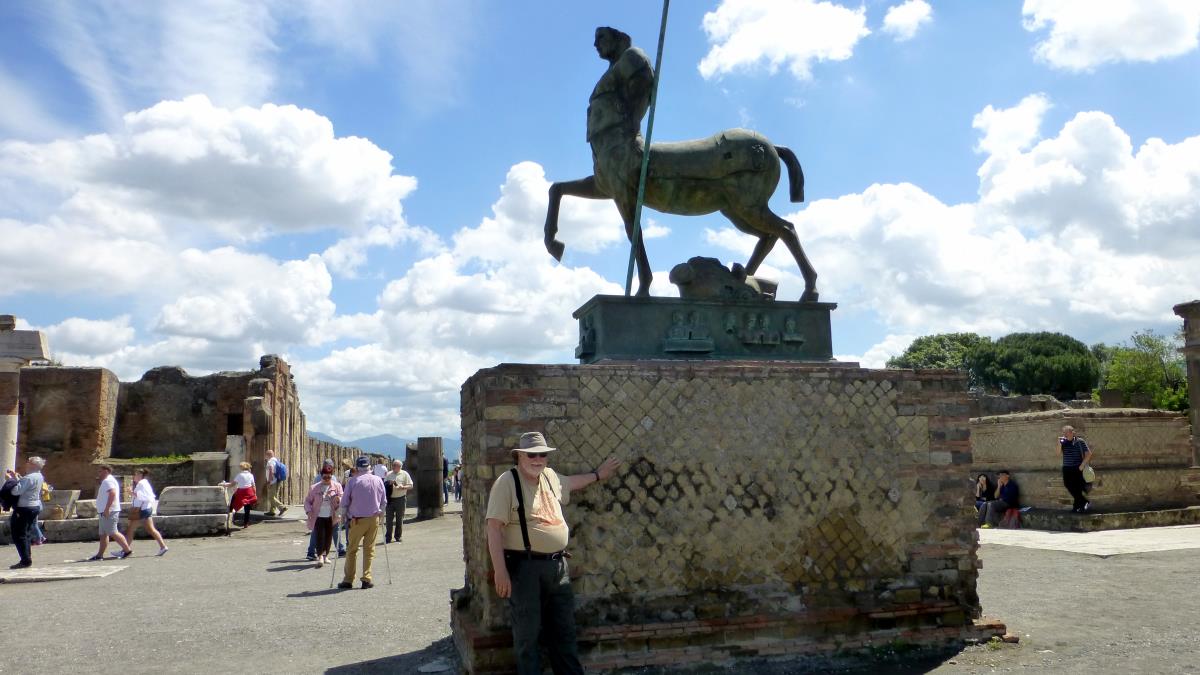
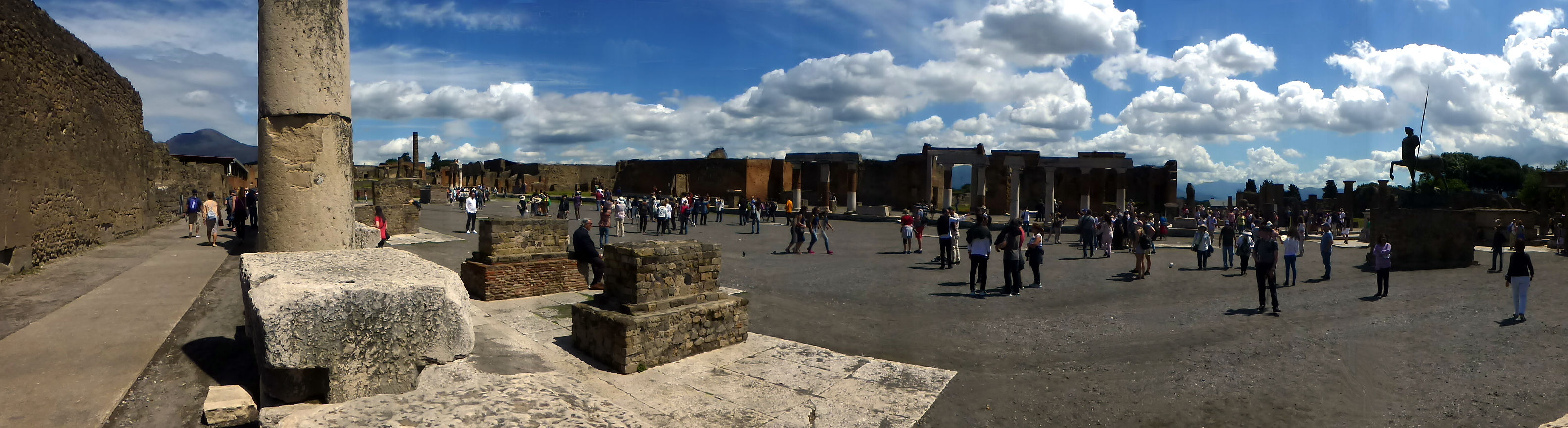
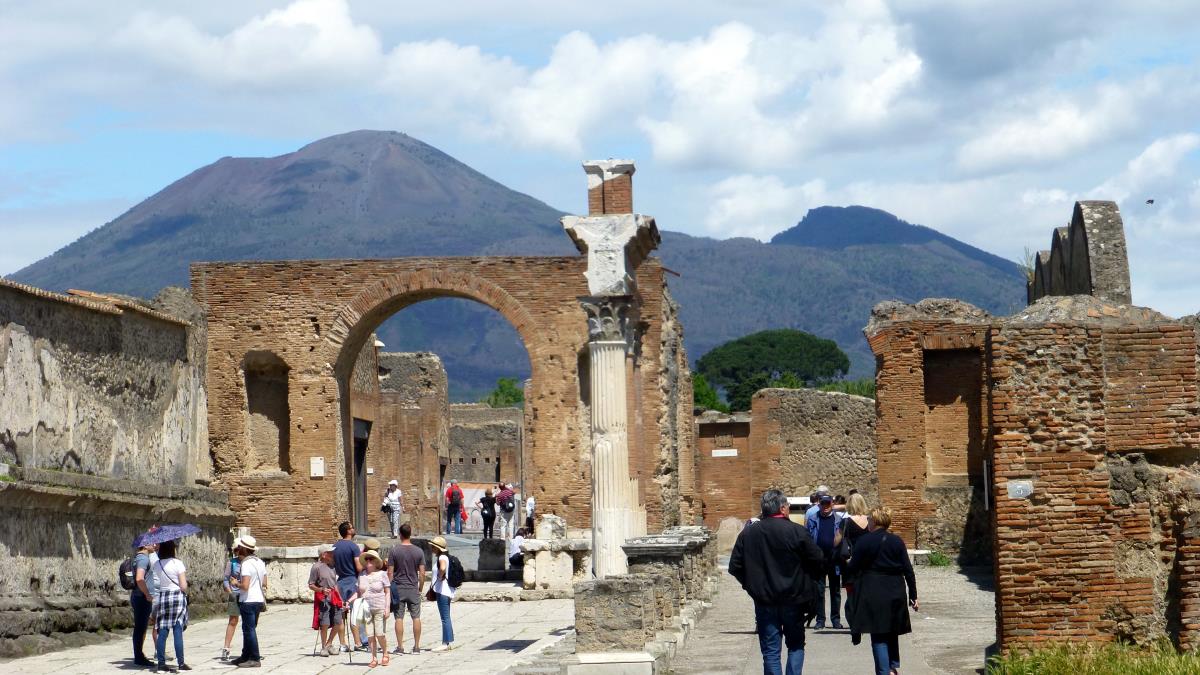
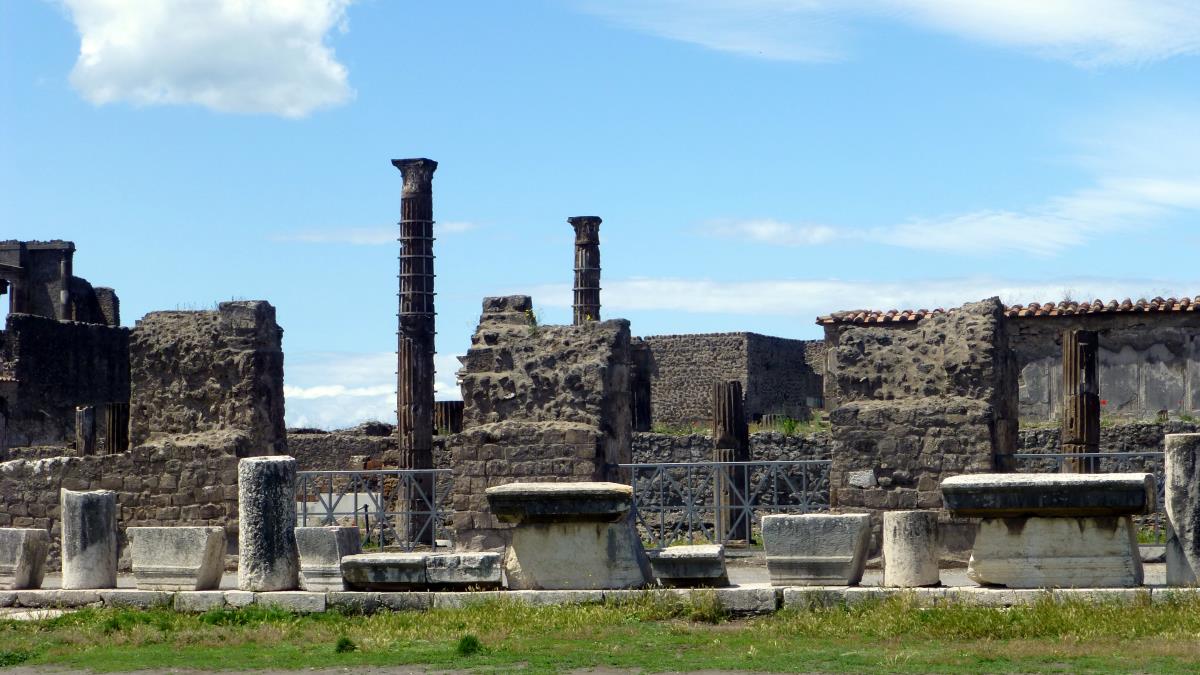
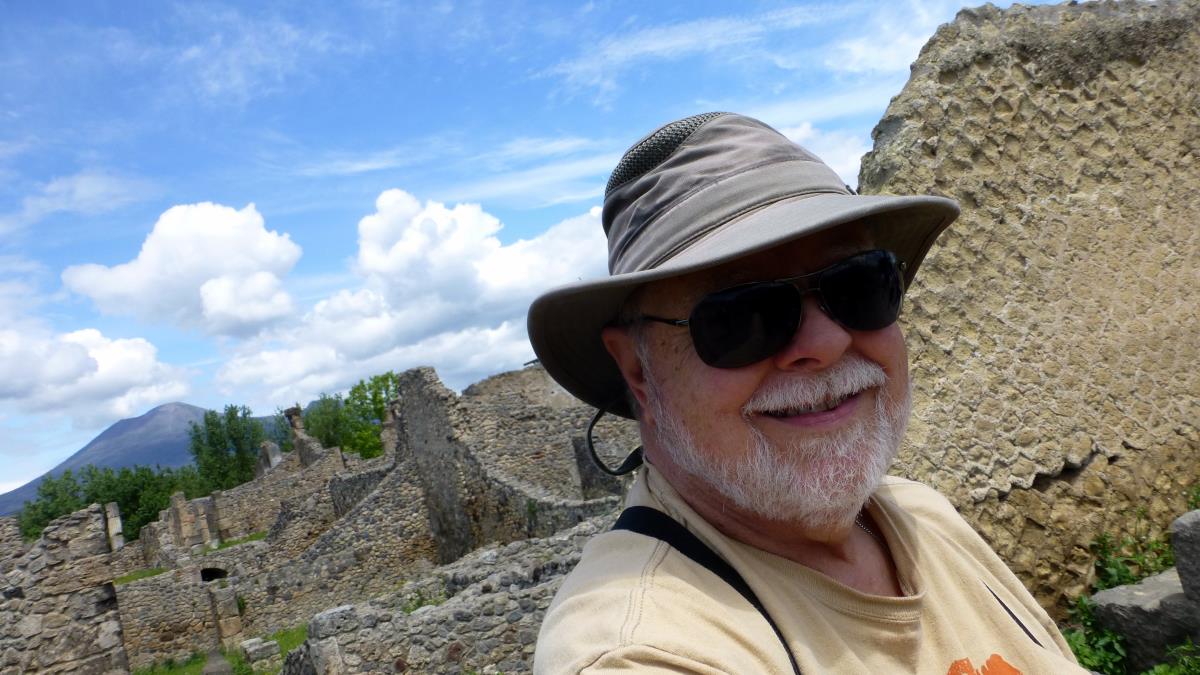
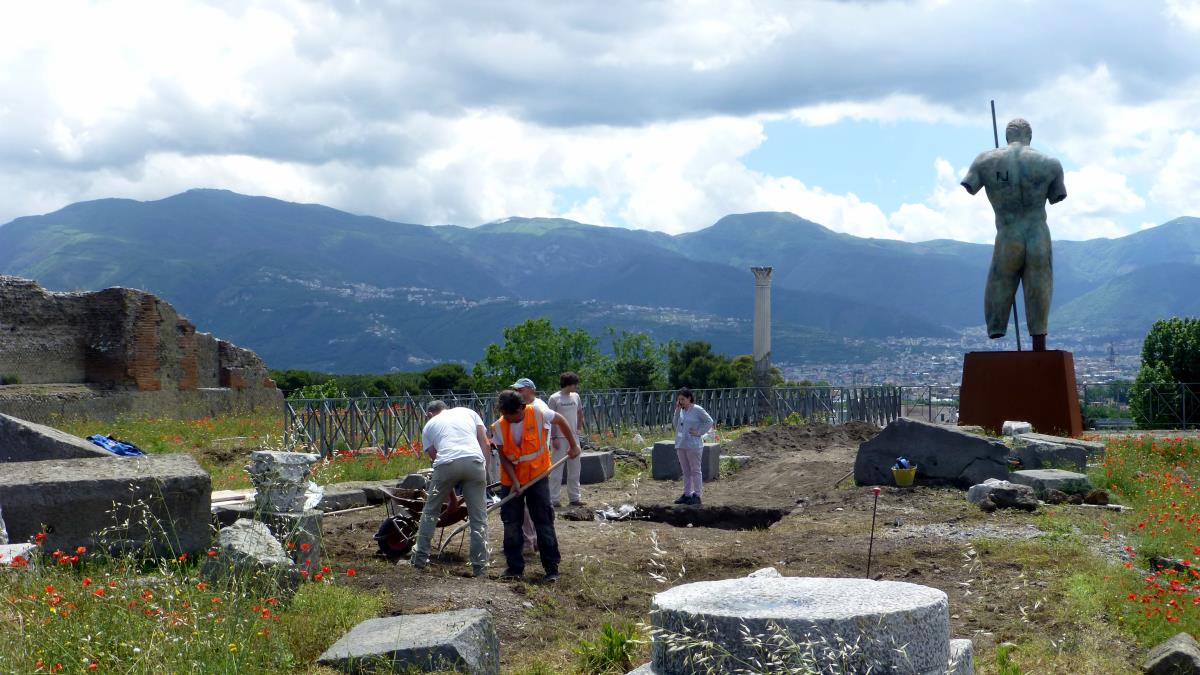
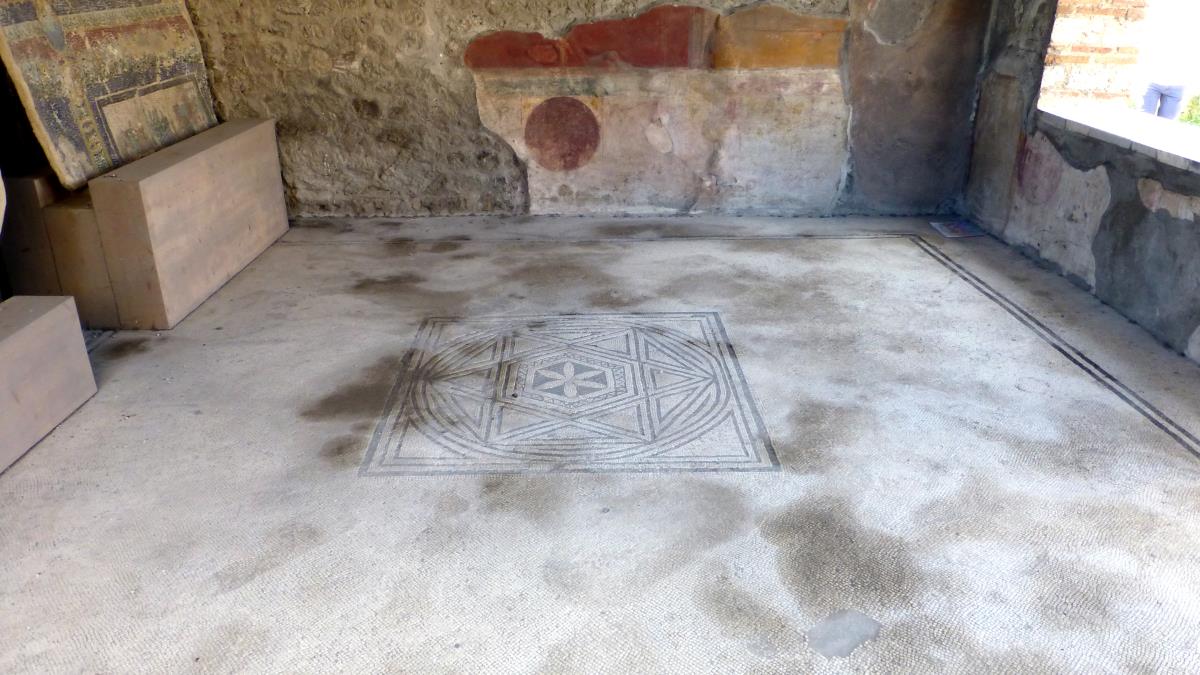
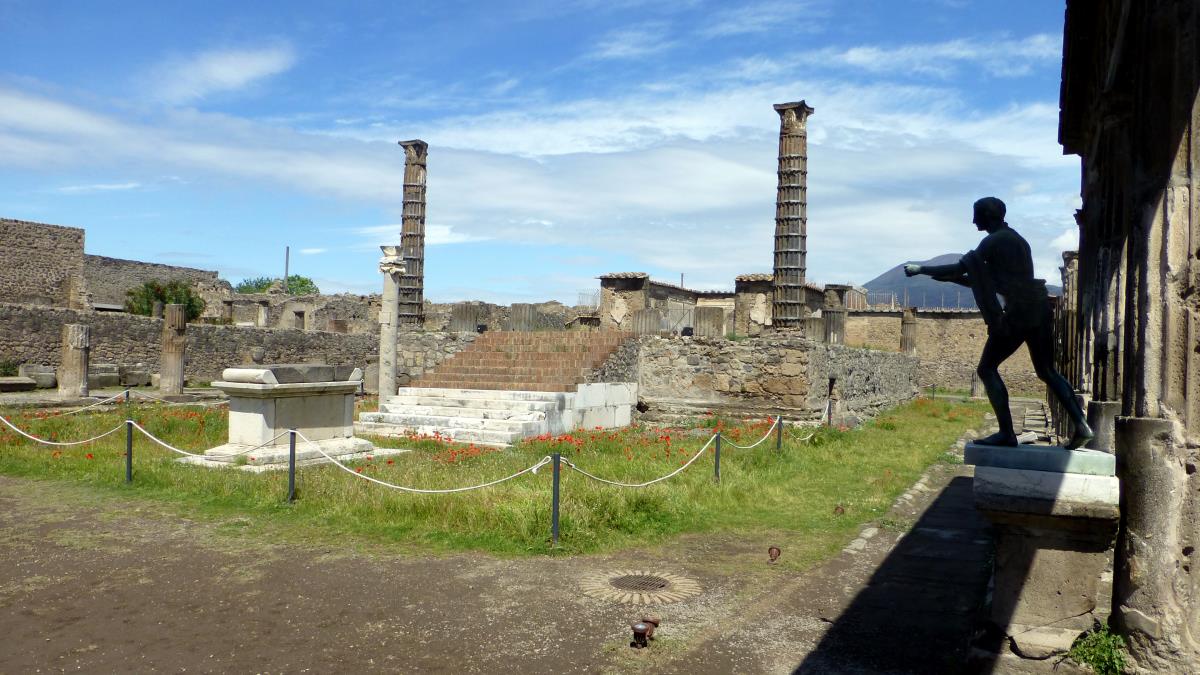
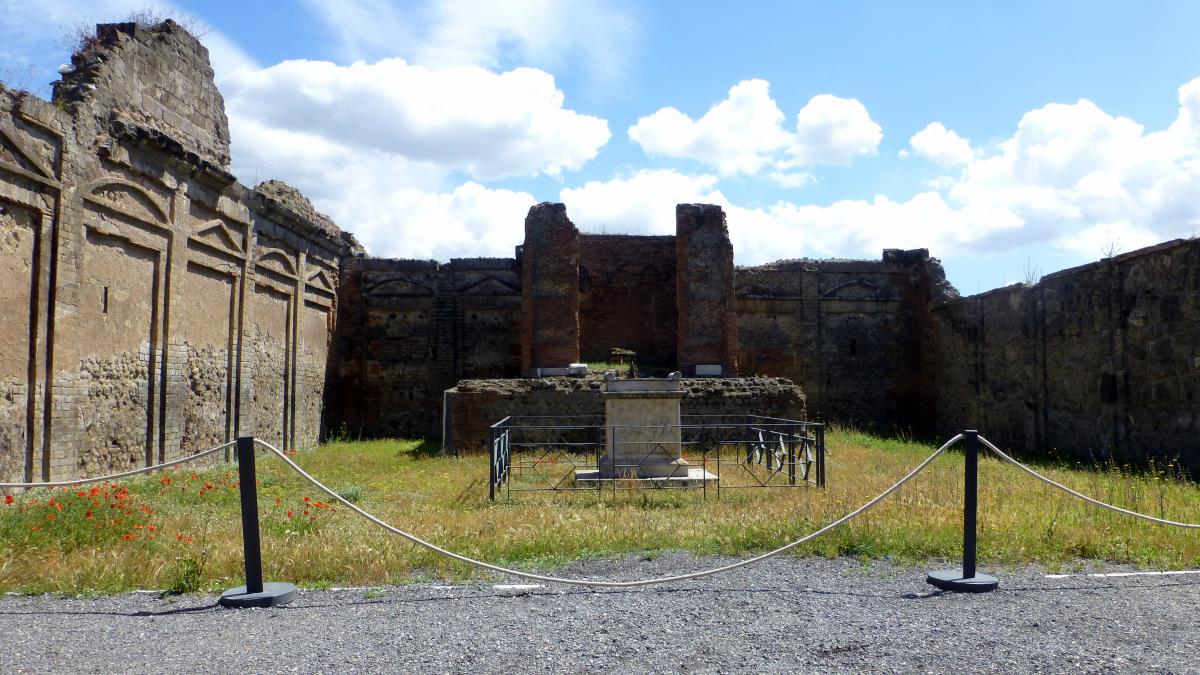
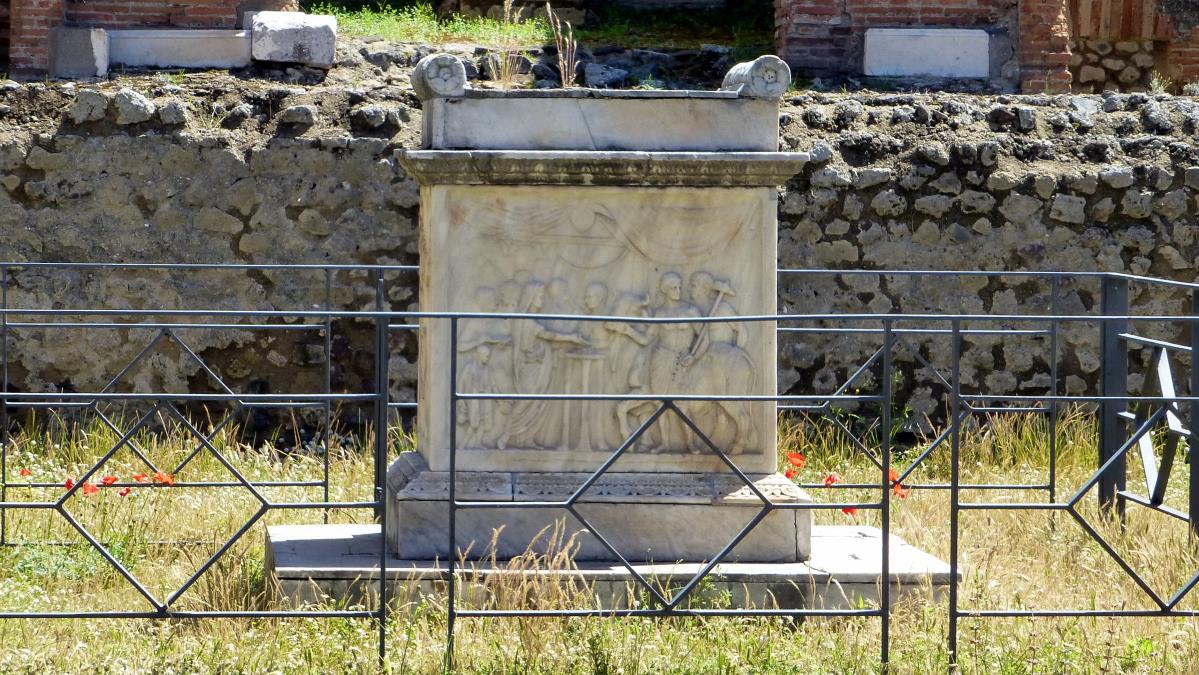
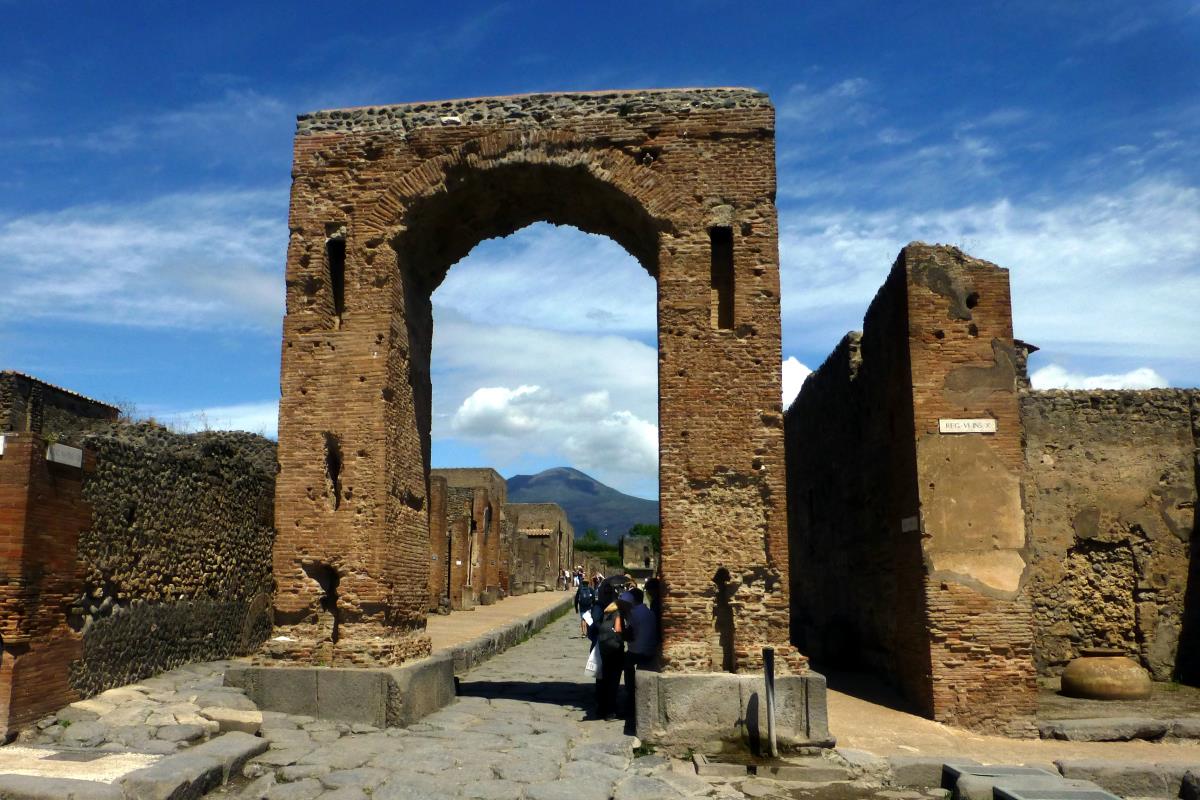
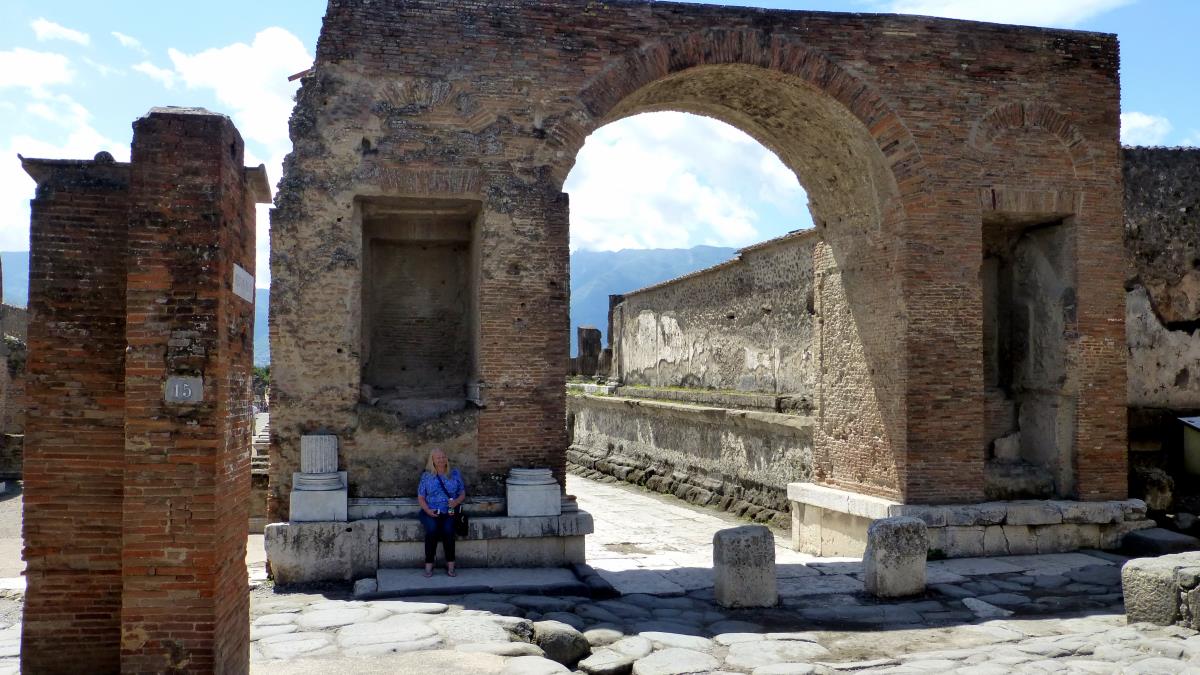
Entering Pompeii, we walked up the Via Marina passing the baths, the Temples of Venus and Apollo and the Basilica and into the Forum. Lining the roads were dwellings and rooms that were used daily by the inhabitants. It was humbling to walk the streets and the homes of the people that were wiped out with lno warning.
Unfortunately, our time in Pompeii was limited and our visit only scratched the surface of this ancient dwelling. Reluctantly, we departed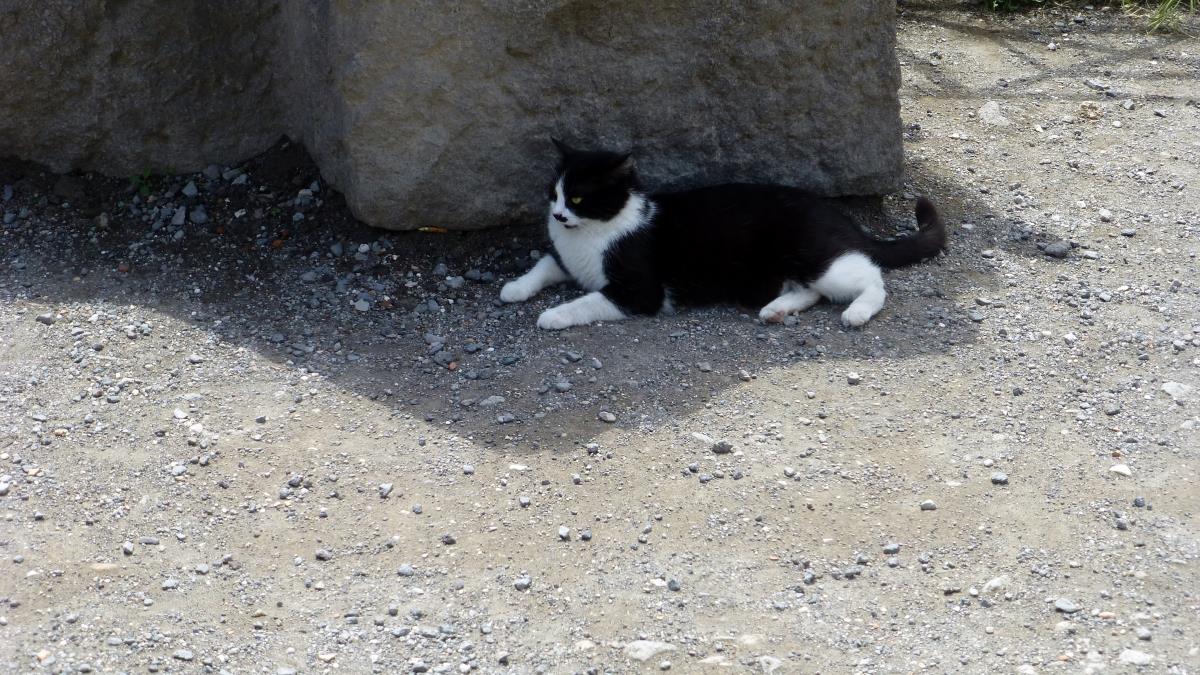 Pompeii to continue on to Rome. Making our way back to the E45, we proceeded north past Vesuvius and through Naples. Approximately 130km later, I happened to catch one of the exit signs pointing to Monte Cassino so I exited.
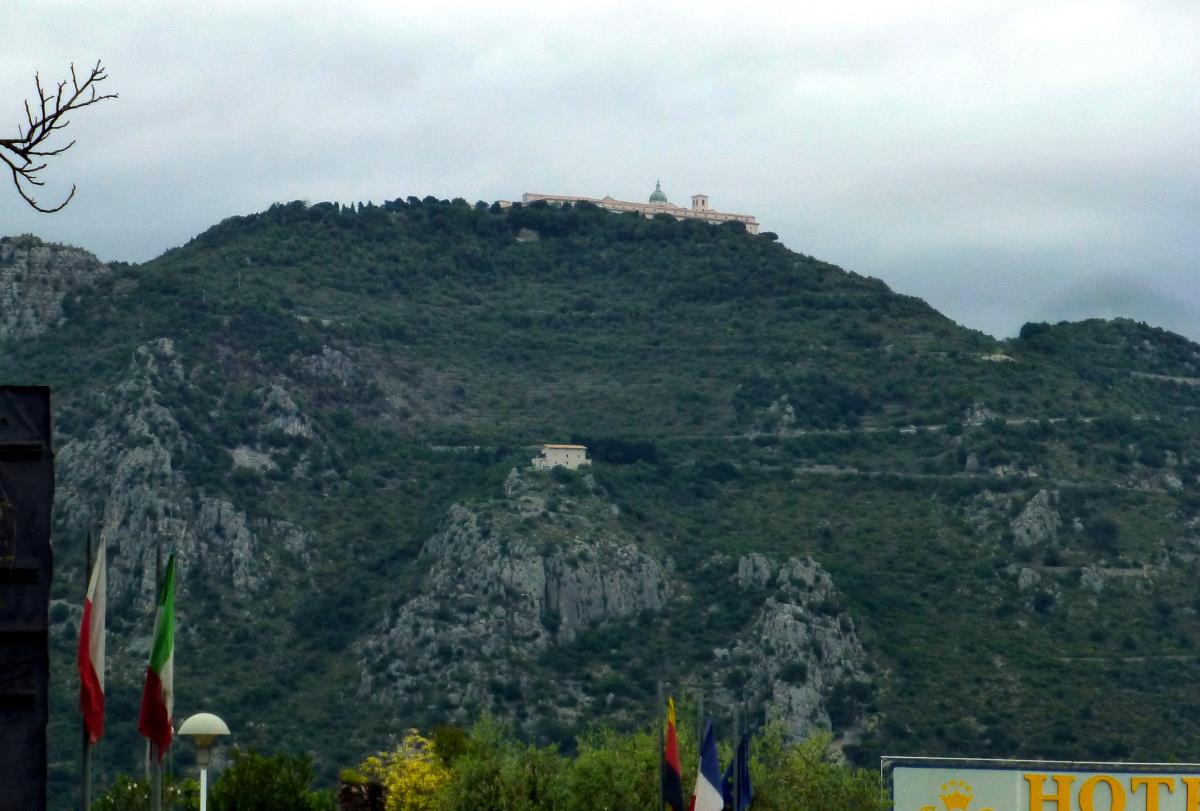
In January of 1944, as the Allies advanced north toward Rome, they found their way blocked by Monte Cassino, an ancient Benedictine Monastary founded in 529AD. Dominating the entrances to the Liri and Rapido valleys, the Germans had commandeered the monastery as an observation post from which they could direct highly accurate artillery fire on the valleys below. With heavily fortified defenses, it formed a major anchor of the German Winter Line. Initially, the Allies attempted to bomb the monastery into submission. However, the Germans held on requiring that it be taken on the ground. As I looked up to its heights, I could appreciate the difficulty in taking the monastery and the reason that the Allies required four assaults and 50,000 casualties to finally conquer the bastion. I had seen the documentary of the Battle of Monte Cassino on the old 20th TV series with Walter Cronkite back in the 50s numerous times and, so, I had to see it for myself.
(A note - The writer, Walter M. Miller, an American catholic, served on the bomber crew that participated in the destruction of the monastery. He was deeply influenced by this event and, in 1959, wrote the Hugo Award wining novel A Canticle for Leibowitz. The novel recounts the efforts of future monks living in the aftermath of nuclear war dedicated to the preservation of mankind's scientific knowledge.)
Re-entering the E45, we proceeded without incident to our home for the next two nights in Focene, just off of the Rome Fiumicino Airport. I'll say little about our facilities other than they were not up to the standards of our previous stays.
For dinner we chose the Il Moro, a seafood restaurant overlooking the Tyrrhenian Sea. It appeared that a reservation was expected, but they sat us anyway. I noticed that all of the surrounding tables had reservation cards with names. And many of the patrons addressed the staff by name. In fact, in the two hours we were there, there was no turn over of the tables which said to me that families came and stayed until closing. This is certainly different than in the States (possibly with the exception with New York City).
I had hoped to order the pasta all'aragosta![]() (pasta with lobster) which appeared on the house specials menu. However, I was informed that none of the house specials were available (huh!) so I chose a pesce fritto
(pasta with lobster) which appeared on the house specials menu. However, I was informed that none of the house specials were available (huh!) so I chose a pesce fritto ![]() (fried fish), another whole fish which I think was a branzino. With an antipasti of mussels (good but not as good as those served at the La Locanda degli Abbatazzi) and a glass (or two) of the house rosé, we returned to our home for the night.
(fried fish), another whole fish which I think was a branzino. With an antipasti of mussels (good but not as good as those served at the La Locanda degli Abbatazzi) and a glass (or two) of the house rosé, we returned to our home for the night.
Checking out, we set Our Lady to take us directly to Pompeii, approximately 20 minutes from the Holiday Inn. Bypassing the parking along
the way, I took the road directly to the entrance where I found a parking space in a lot just a few minutes walk from the front gate. When we left, the cost was only €4, so I was quite pleased.
We found the ticket line to be short and were soon making our way through what had once been the thriving city to 11,000 people. Pompeii is believed to have been founded in the 6th or 7th century BC, coming under the domination of Rome in the 4th century BC. The city was destroyed in the eruption that occurred on August 24, 79AD. As fate would have it, this was one day after Vulcanalia
The city was discovered in 1599 during the digging of an underground channel to divert the river Sarno. However, the discovery was covered up and it was not until 1748 that it was rediscovered as a result of intentional excavations to become the attraction it is today.
Entering Pompeii, we walked up the Via Marina passing the baths, the Temples of Venus and Apollo and the Basilica and into the Forum. Lining the roads were dwellings and rooms that were used daily by the inhabitants. It was humbling to walk the streets and the homes of the people that were wiped out with lno warning.
Unfortunately, our time in Pompeii was limited and our visit only scratched the surface of this ancient dwelling. Reluctantly, we departed
Pompeii to continue on to Rome. Making our way back to the E45, we proceeded north past Vesuvius and through Naples. Approximately 130km later, I happened to catch one of the exit signs pointing to Monte Cassino so I exited.
In January of 1944, as the Allies advanced north toward Rome, they found their way blocked by Monte Cassino, an ancient Benedictine Monastary founded in 529AD. Dominating the entrances to the Liri and Rapido valleys, the Germans had commandeered the monastery as an observation post from which they could direct highly accurate artillery fire on the valleys below. With heavily fortified defenses, it formed a major anchor of the German Winter Line. Initially, the Allies attempted to bomb the monastery into submission. However, the Germans held on requiring that it be taken on the ground. As I looked up to its heights, I could appreciate the difficulty in taking the monastery and the reason that the Allies required four assaults and 50,000 casualties to finally conquer the bastion. I had seen the documentary of the Battle of Monte Cassino on the old 20th TV series with Walter Cronkite back in the 50s numerous times and, so, I had to see it for myself.
(A note -
Re-
For dinner we chose the Il Moro, a seafood restaurant overlooking the Tyrrhenian Sea. It appeared that a reservation was expected, but they sat us anyway. I noticed that all of the surrounding tables had reservation cards with names. And many of the patrons addressed the staff by name. In fact, in the two hours we were there, there was no turn over of the tables which said to me that families came and stayed until closing. This is certainly different than in the States (possibly with the exception with New York City).
I had hoped to order the pasta all'aragosta
 To Day 12 -