


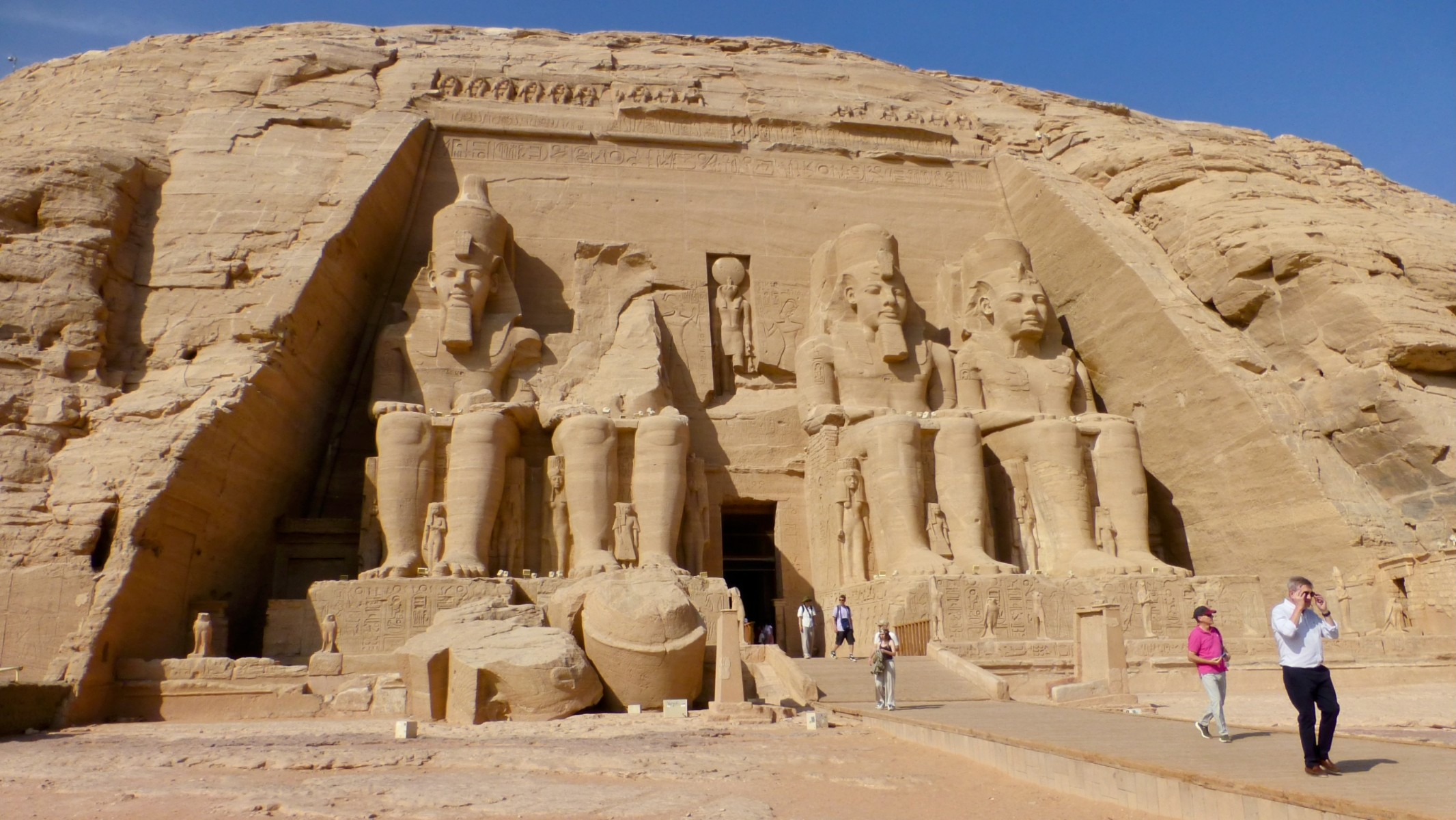
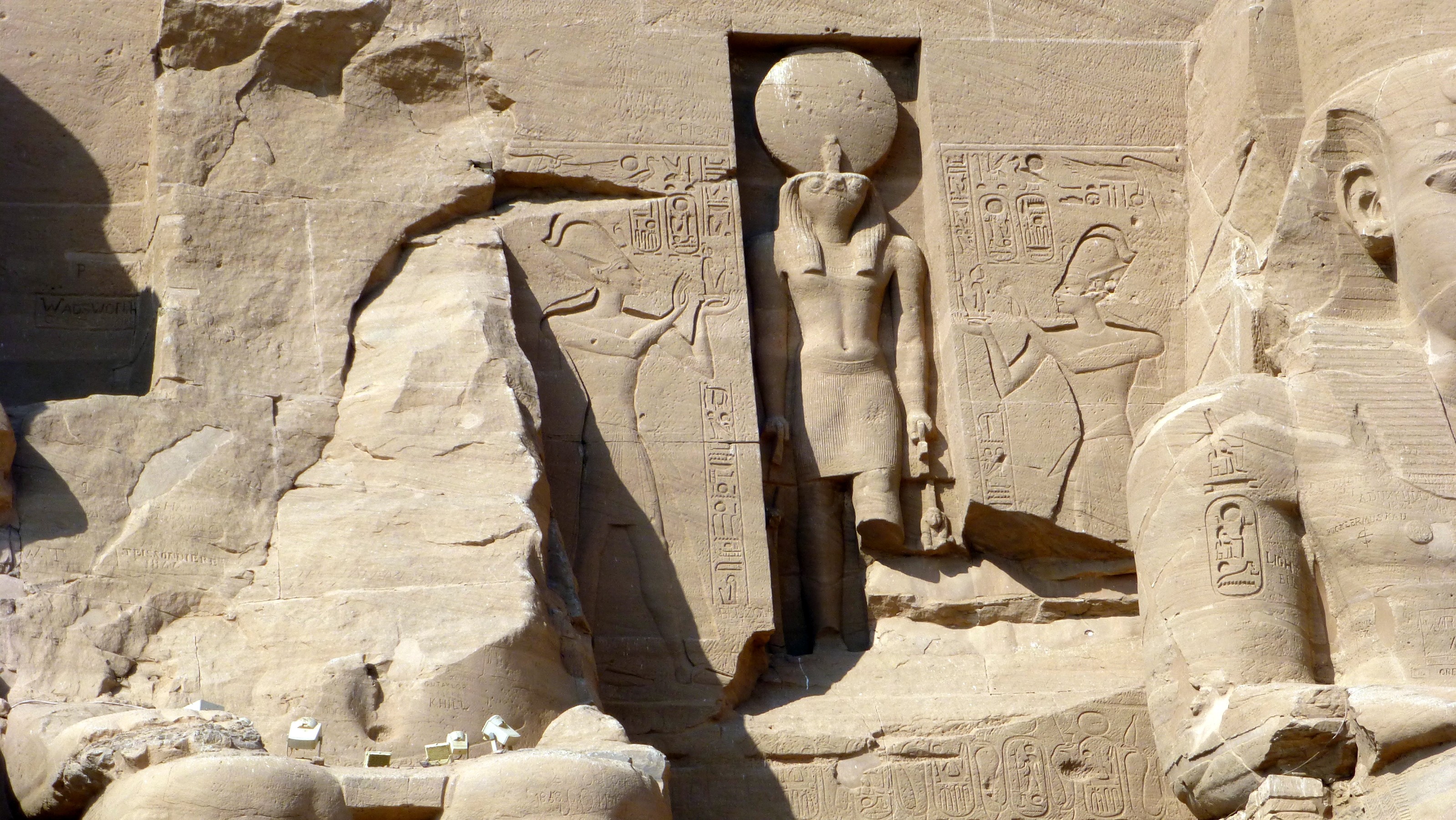
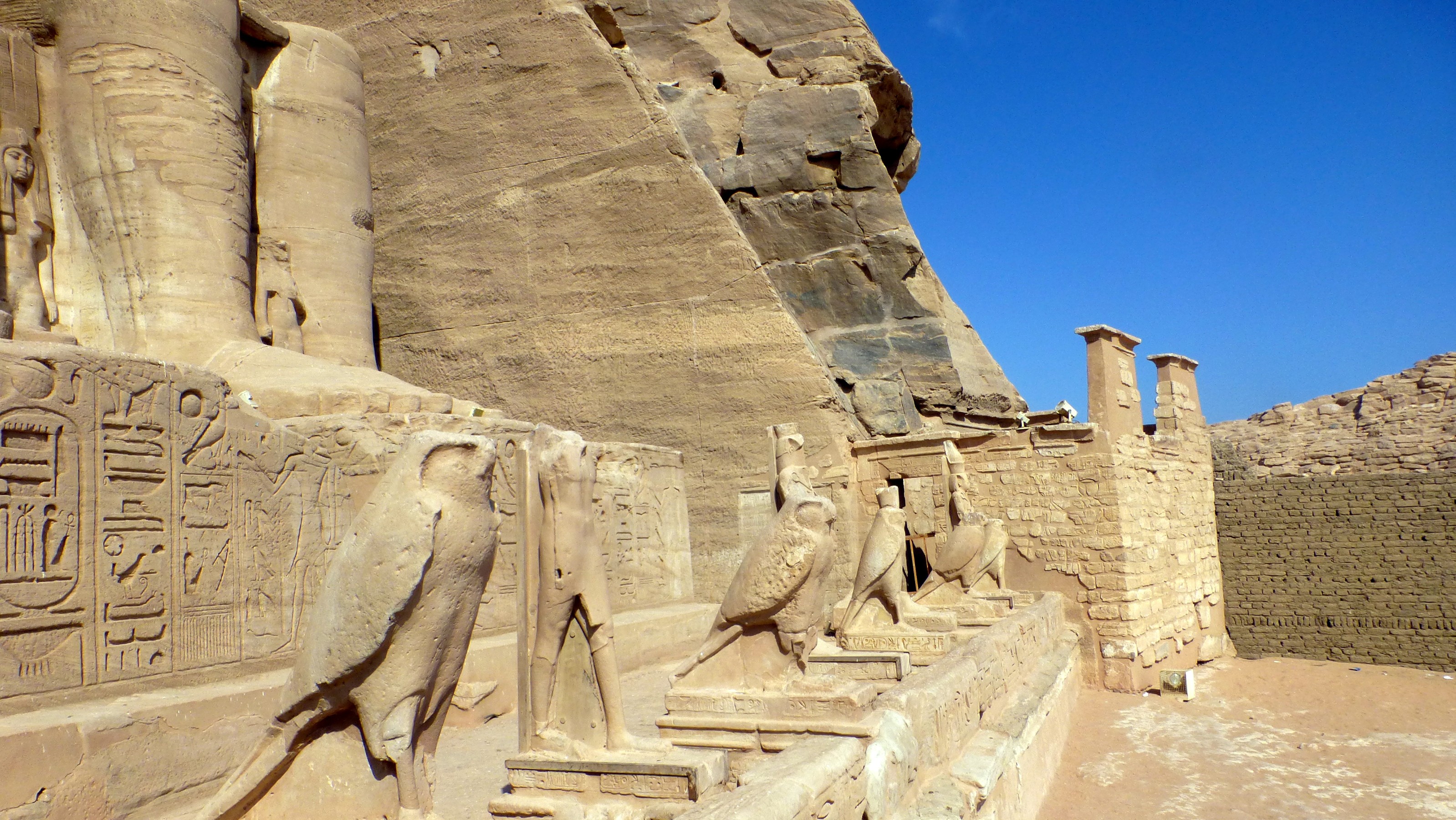
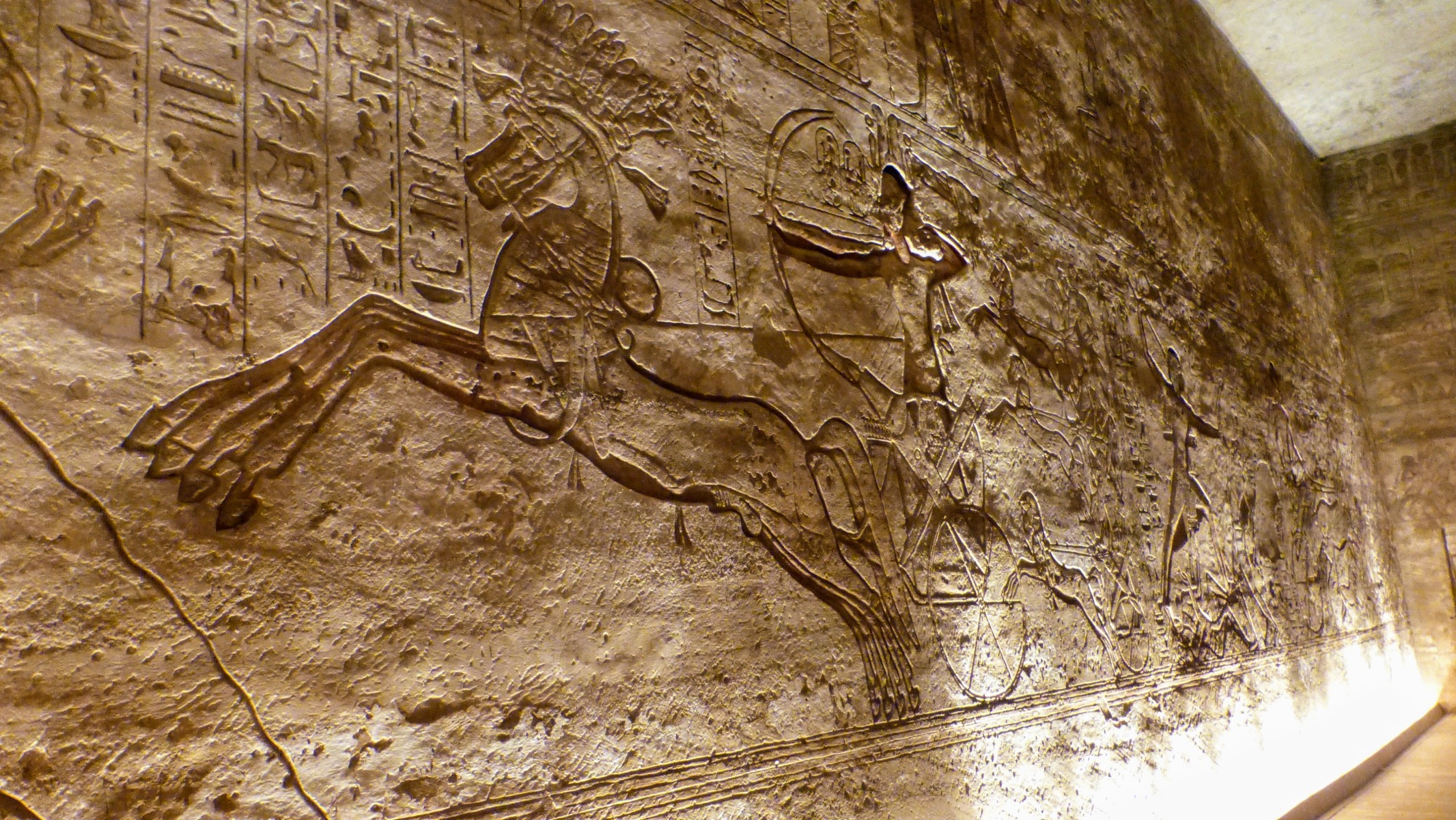
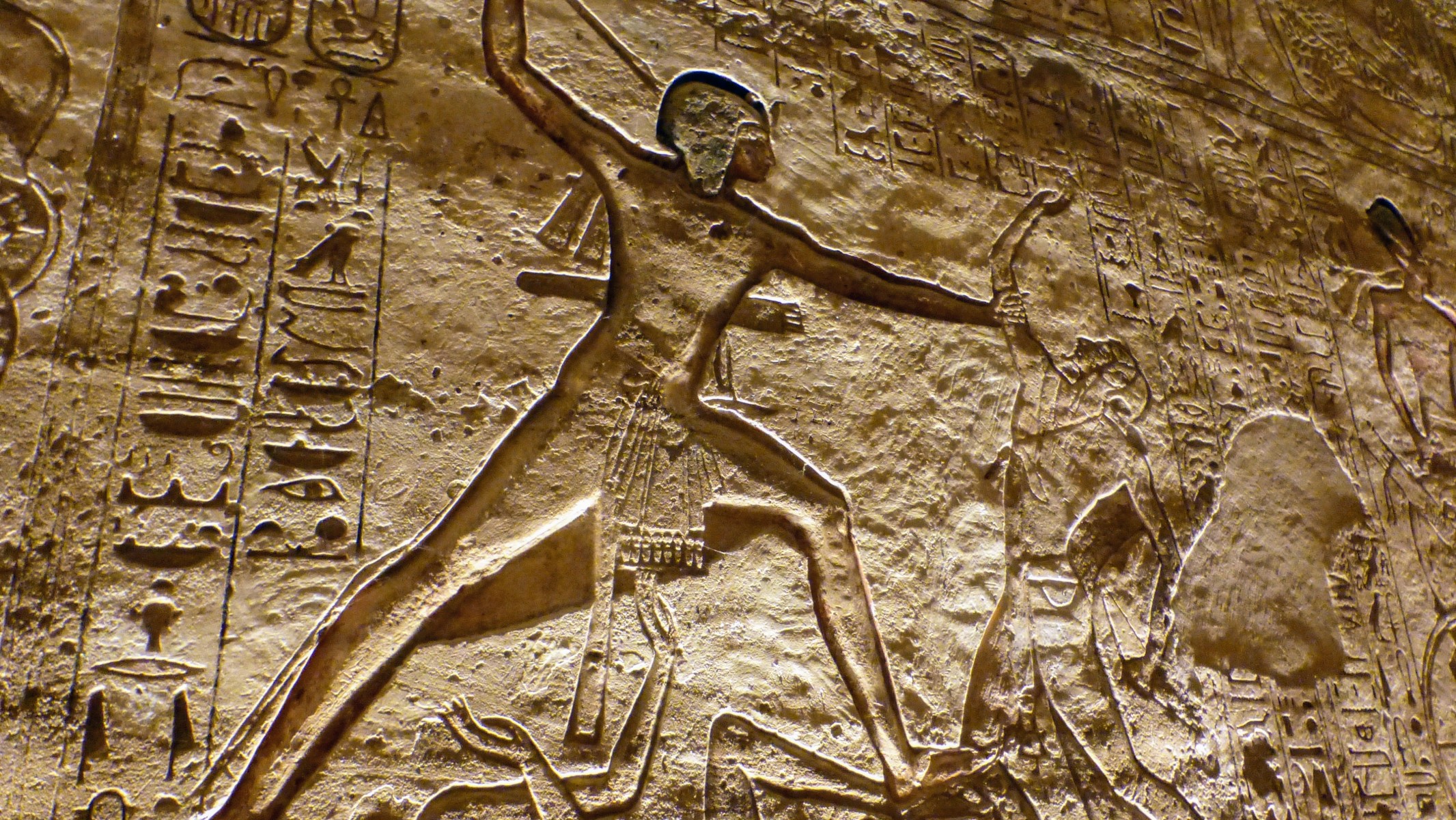
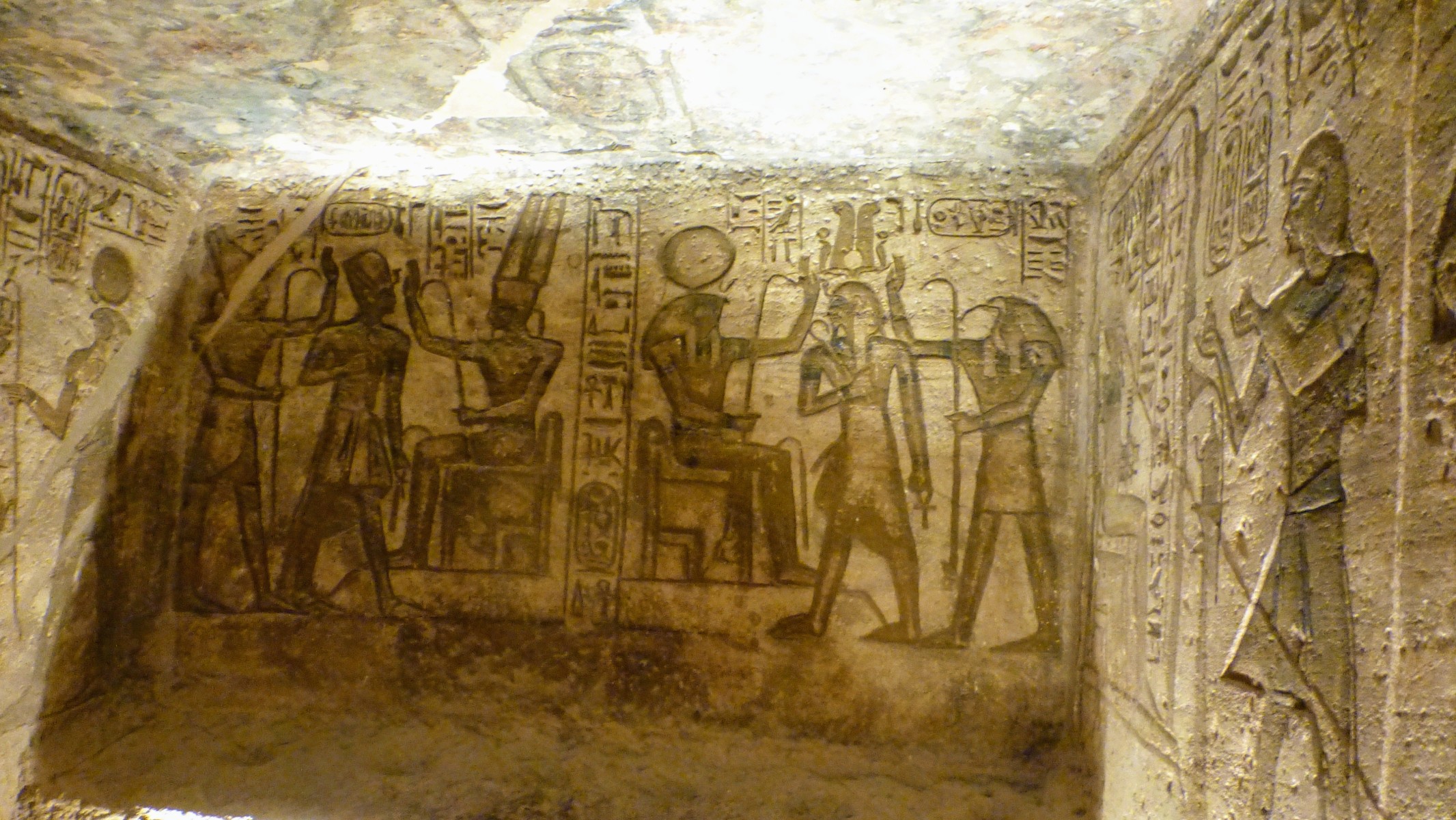
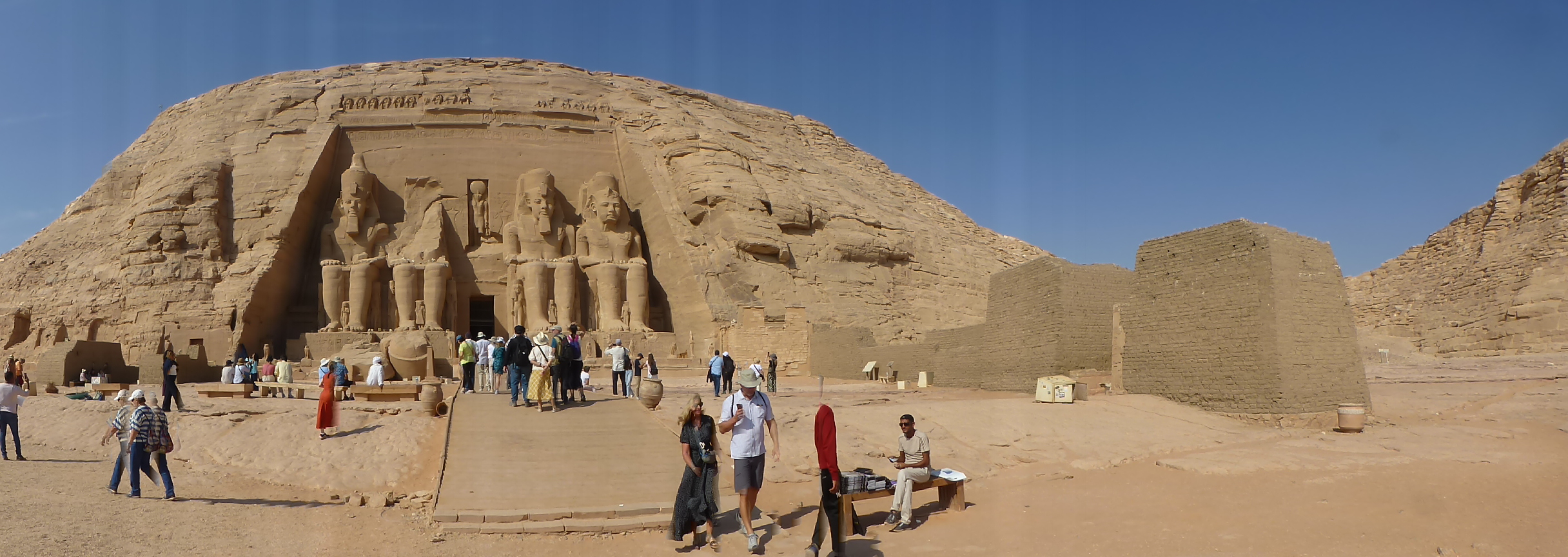
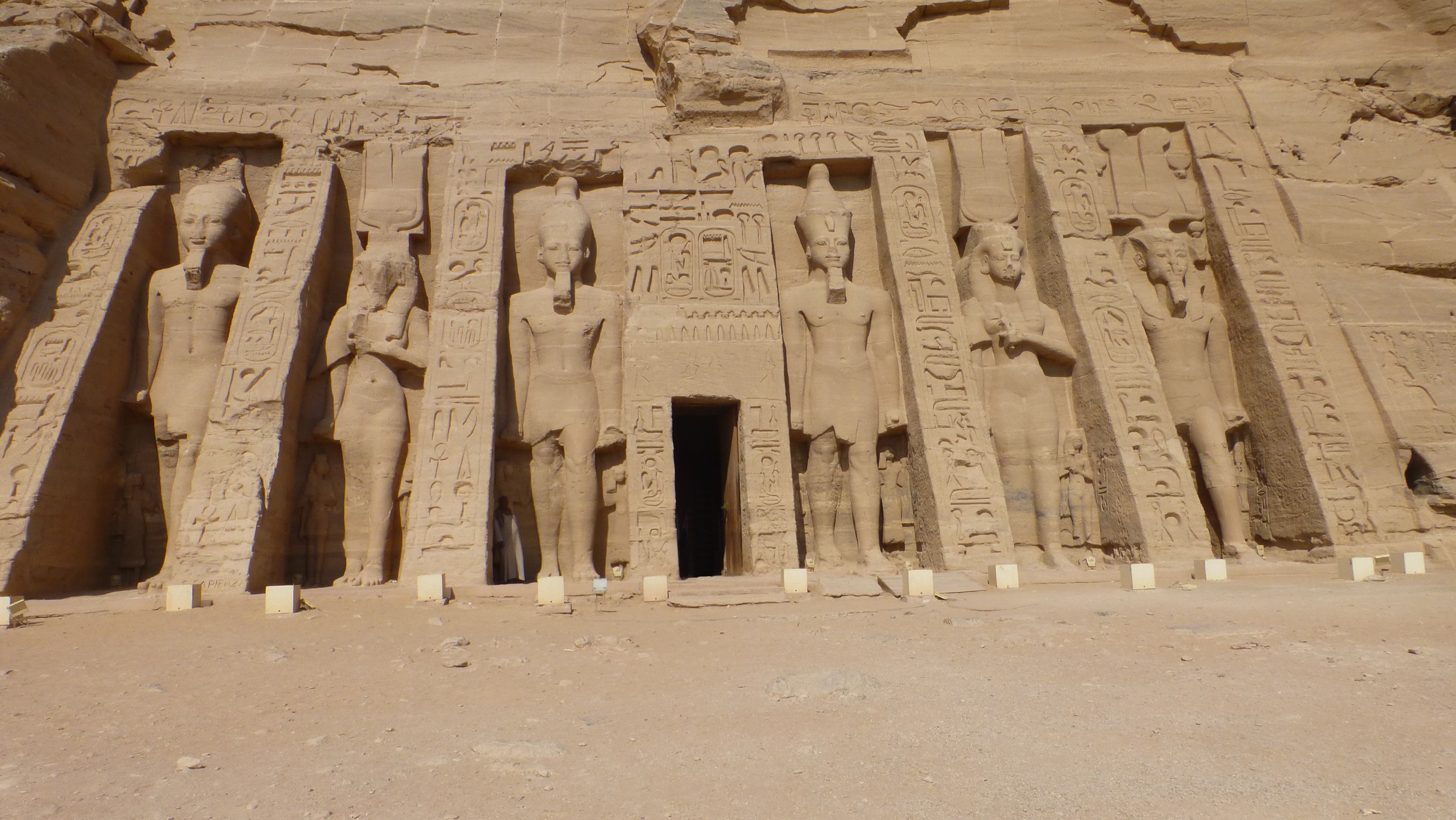
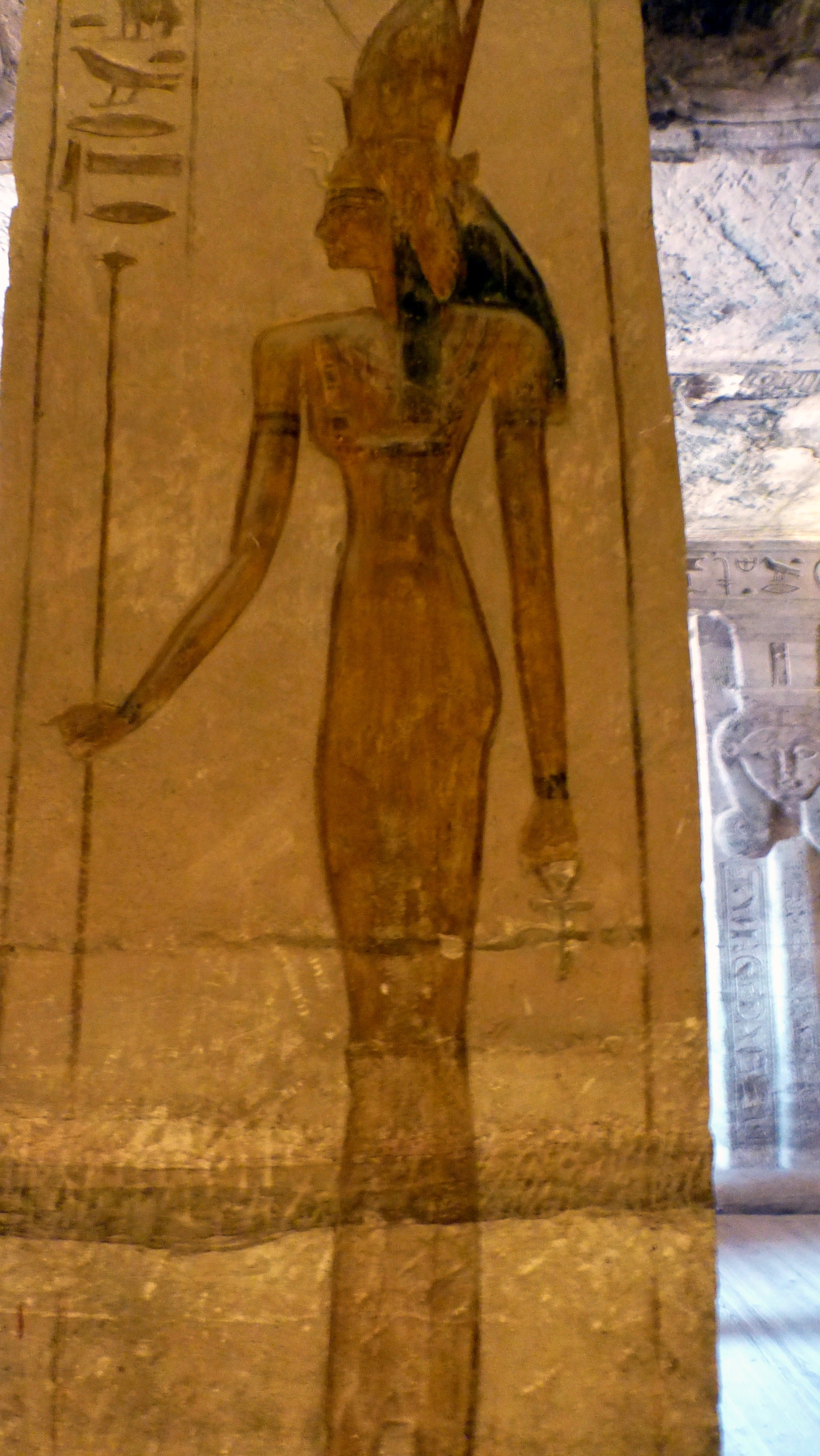
In approximately 1264 BC, Ramesses II launched an extensive building program throughout Egypt and Nubia, a region around the confluence of the Blue Nile and White Nile rivers which Egypt controlled. Nubia, a region of riches, especially gold, being important to Ramesses, was the sight of several grand temples. The most prominent of these were the two rock-cut temple near what is now the village of Abu Simbel. The Great Temple is dedicated to Ramesses II himself while the Small Temple is dedicated to his chief wife Queen Nefertari.
Construction of the two temples began around 1264 BC and was completed about 1244 BC. The temples fell into disuse and by about 600 BC sands covered the temple up to about the knees of the statues. The temple was rediscovered in 1813 by the Swiss researcher Johann Ludwig Burckhardt. Like the Philae Temple, Abu Simbel would have been flooded by the reservoir of the Aswan High Dam. In 1968 it was relocated in its entirety to its present location above the reservoir. In 1979 it was designated a part of the UNESCO World Heritage Site known as the Nubian Monuments.
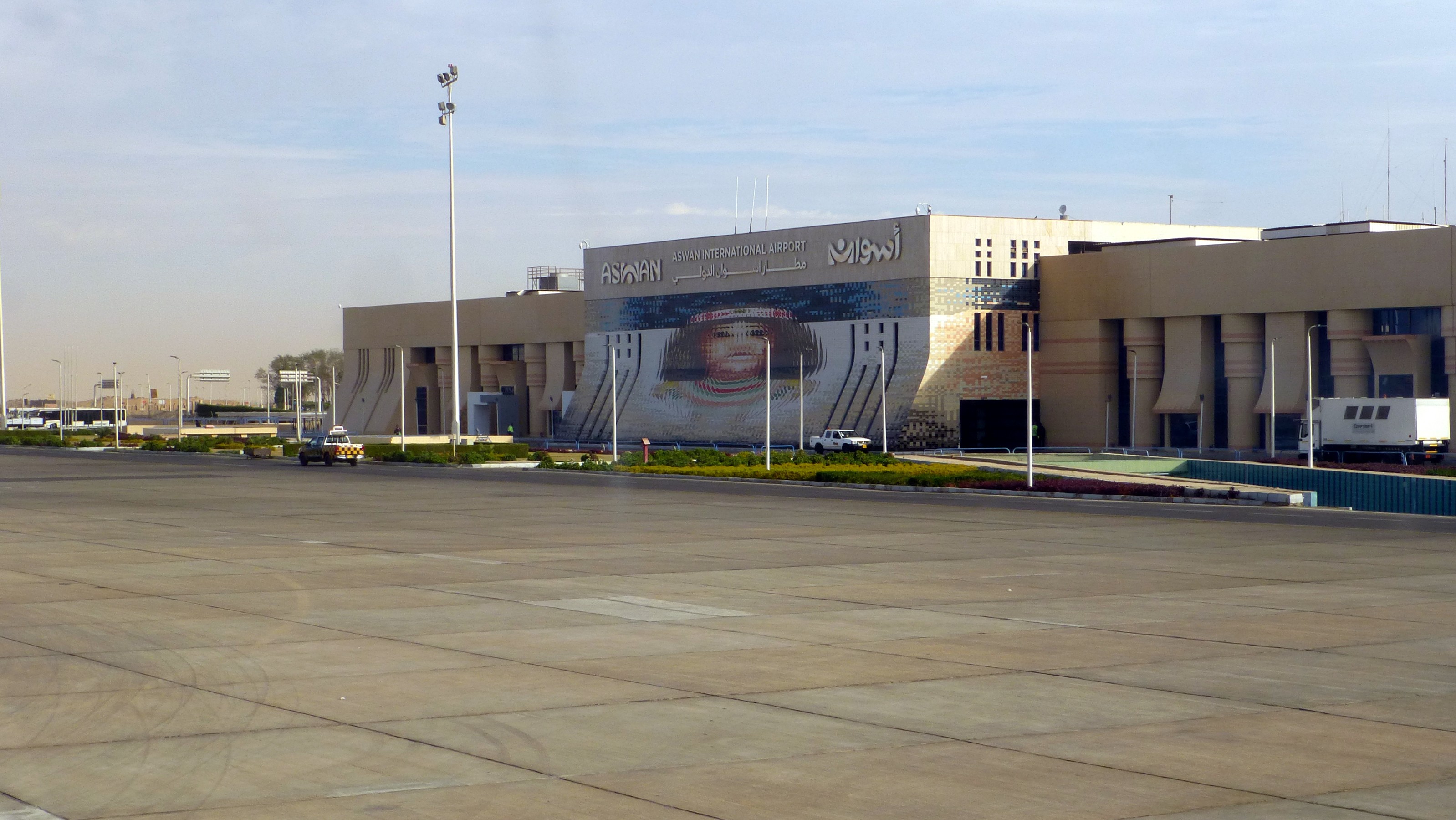
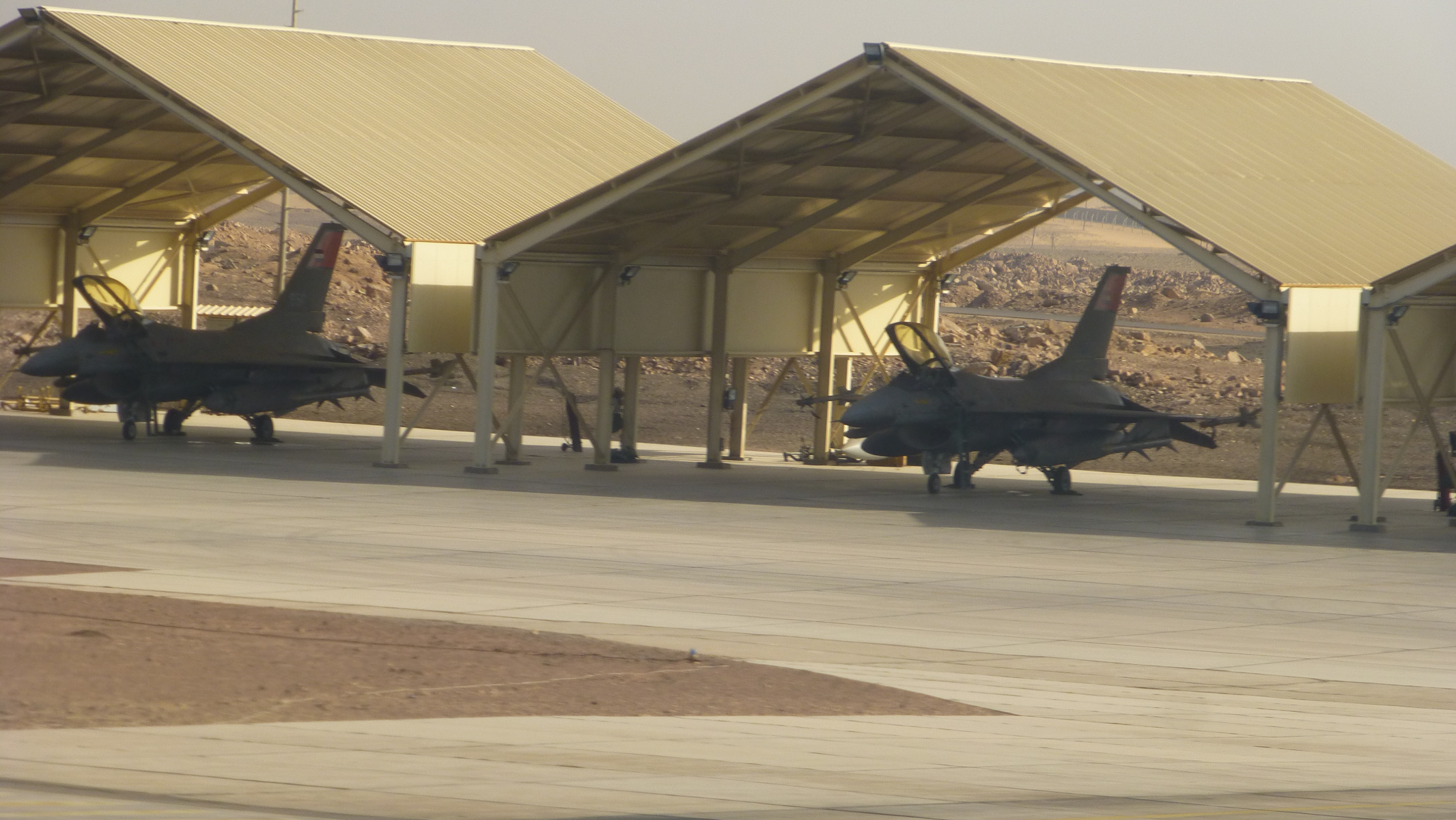
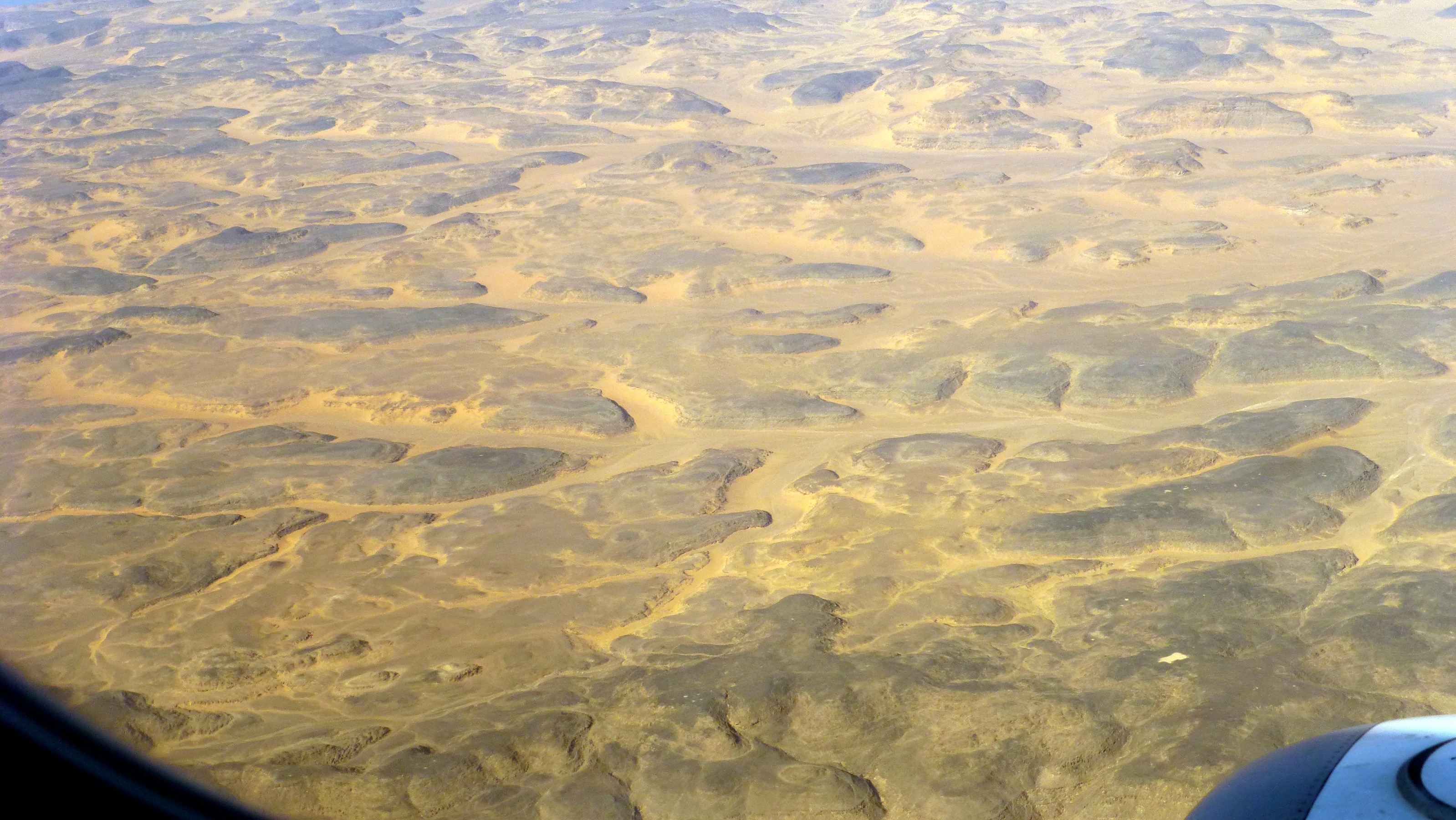
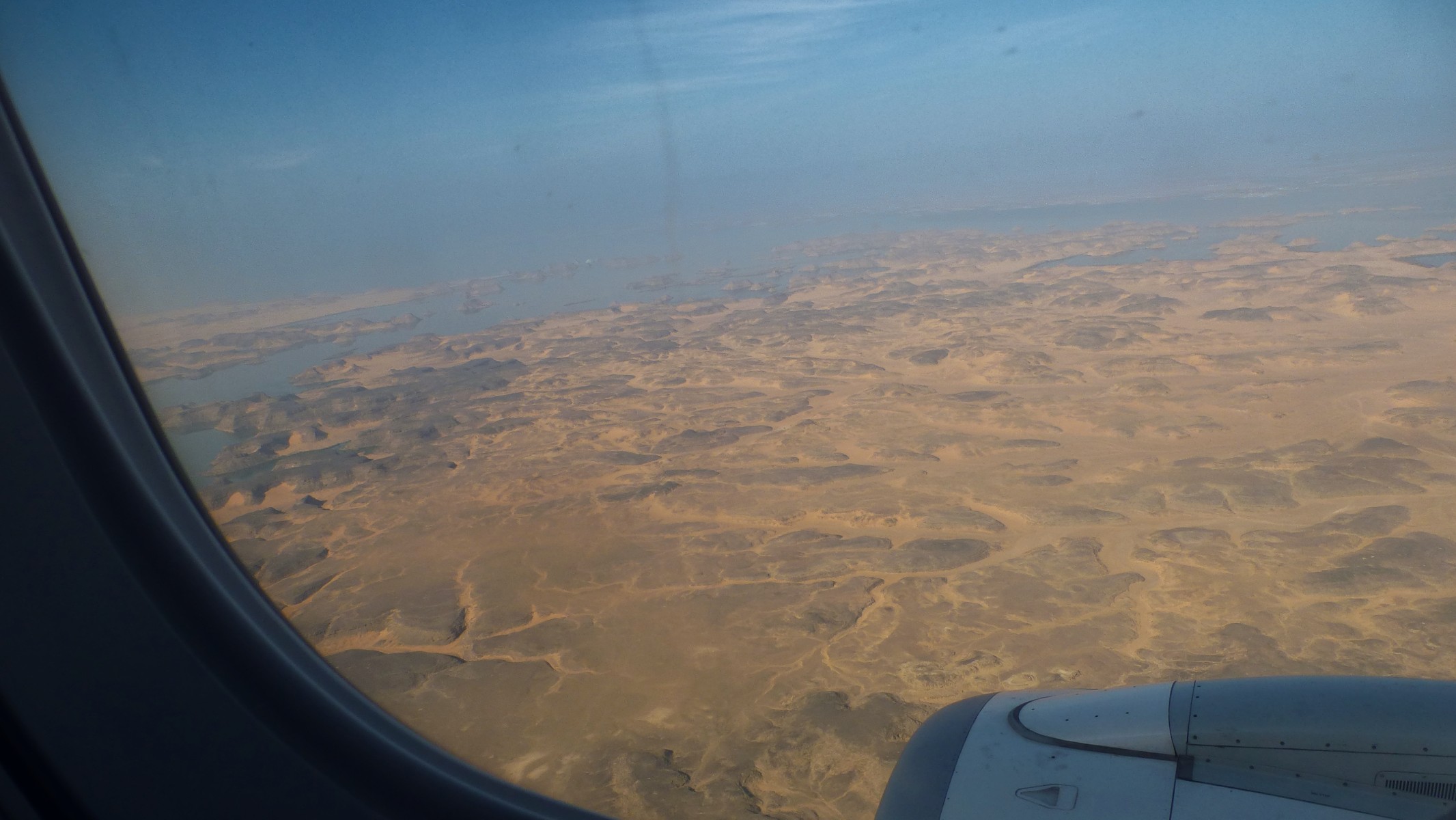
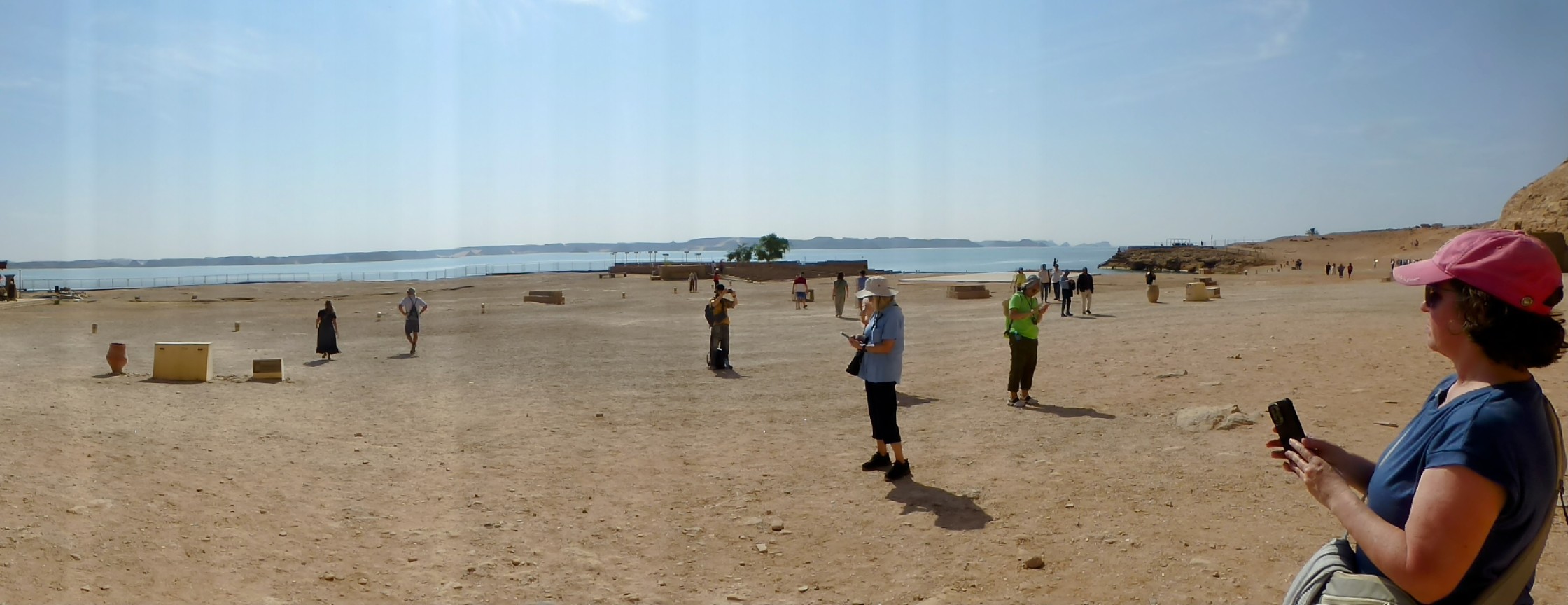
After Abu Simbel my day is free. Amy, on the other hand, has opted for an afternoon of dune surfing and swimming on the Nile. Like you, I look forward to the photos.
To return to the Splendors of Egypt & the Nile index, click here.
To Day 6 - Kom Ombo Temple To Day 8 - Aswan High Dam